
Cars
The New BMW i3 Is Here: Meet The First All-Electric 3 Series

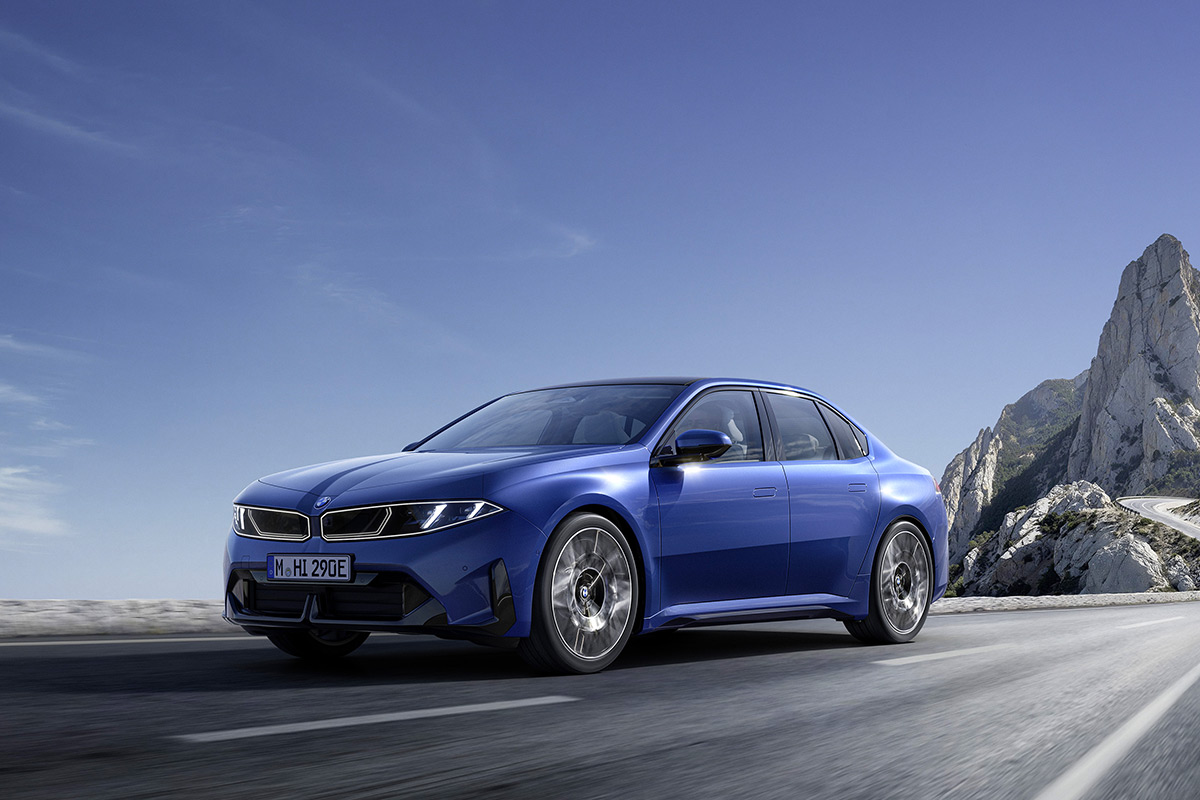
For 50 years, the BMW 3 Series has been the gold standard of sport sedans. It’s the car that has defined what a driver’s car should feel like: balanced, precise, and endlessly satisfying to push. Now BMW is taking that legacy and electrifying it.. literally, unveiling the all-new BMW i3, the first fully electric 3 Series, and the second vehicle built on their Neue Klasse platform.
If you were worried that going electric would sand off the 3 Series’ sharp edges, BMW has some reassuring news for you.
463 Horsepower And Up To 440 Miles Of Range
Let’s get the numbers out of the way first, because they’re seriously impressive. The BMW i3 50 xDrive launches with dual electric motors (one on each axle) delivering a combined system output of 463 hp and 476 lb-ft of torque. That’s performance sedan territory without question.
But what may turn even more heads is the projected range: up to 440 miles on a full charge. Critically, that number is based on EPA-style testing, not the more generous European WLTP standard. If real-world results come anywhere close to that figure, the i3 would be one of the longest-range electric sedans on the market.
Charging is equally serious. The i3 runs on an 800-volt architecture capable of up to 400 kW DC fast charging, meaning pit stops at chargers should be measured in minutes, not hours. The car also supports Vehicle-to-Load, Vehicle-to-Home, and Vehicle-to-Grid functionality, so when it’s parked it can power your gear, your house, or even feed energy back to the grid.
A Design That Actually Looks Like A BMW
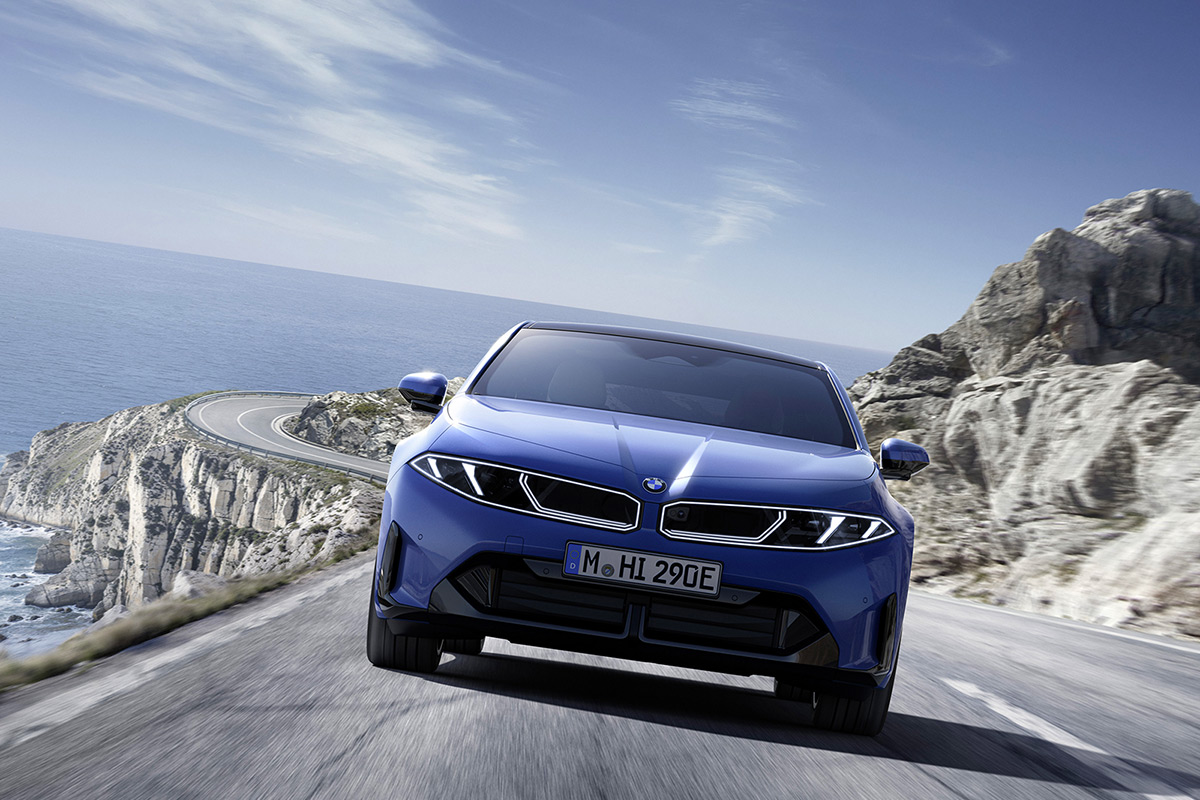
One of the biggest complaints about BMW’s recent design direction has been the oversized kidney grilles that seemed to eat up the entire front end. The i3 signals a meaningful course correction.
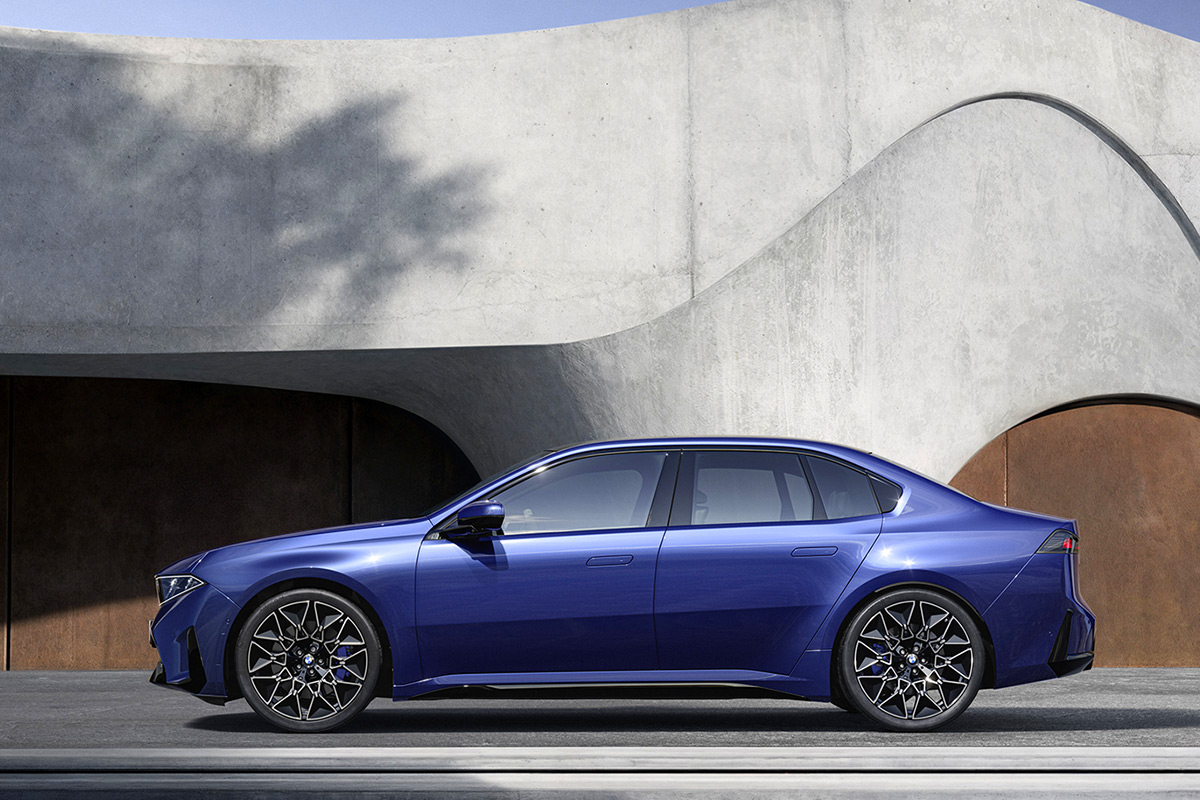
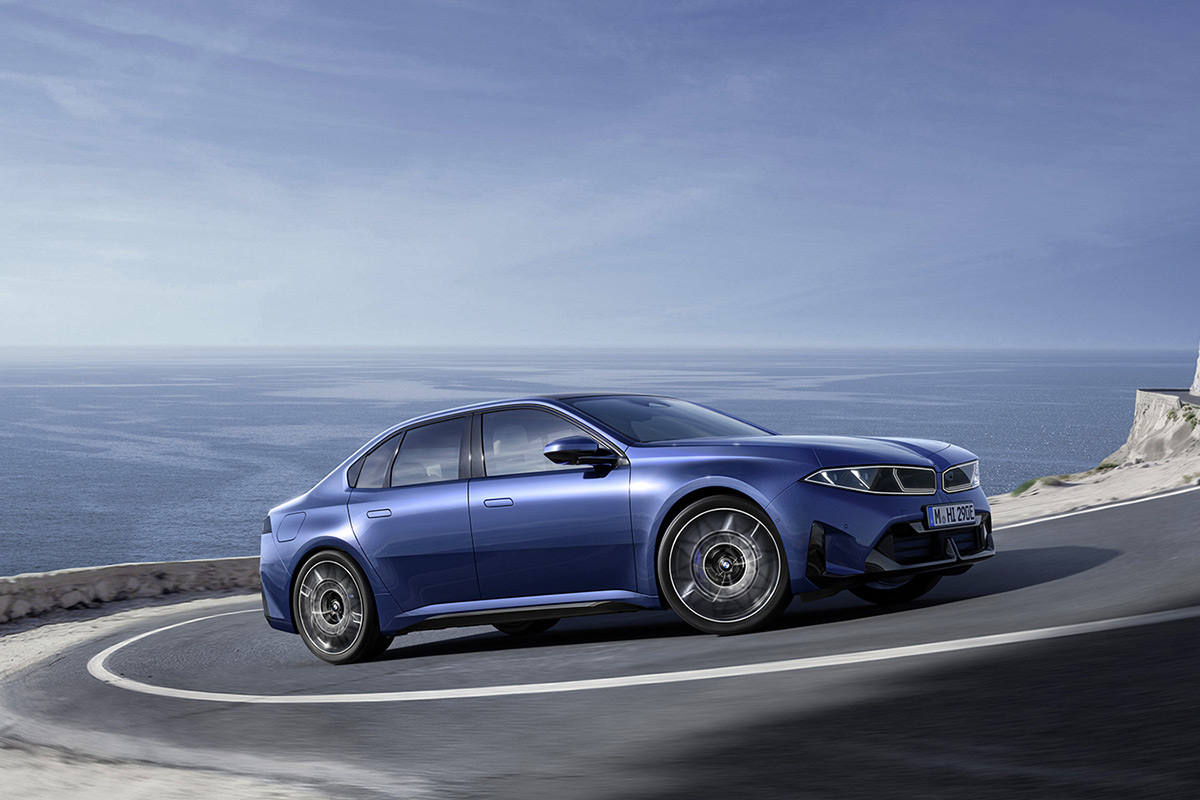
Built on the same Neue Klasse design language that debuted with the iX3 SUV, the i3 wears a modern “2.5-box” silhouette with a long wheelbase, short overhangs, and boldly flared wheel arches that give it a wide, planted stance. The front end merges the iconic kidney grille and twin headlights into a single unified geometry-and-light element. Not going to lie, I think it looks pretty great.
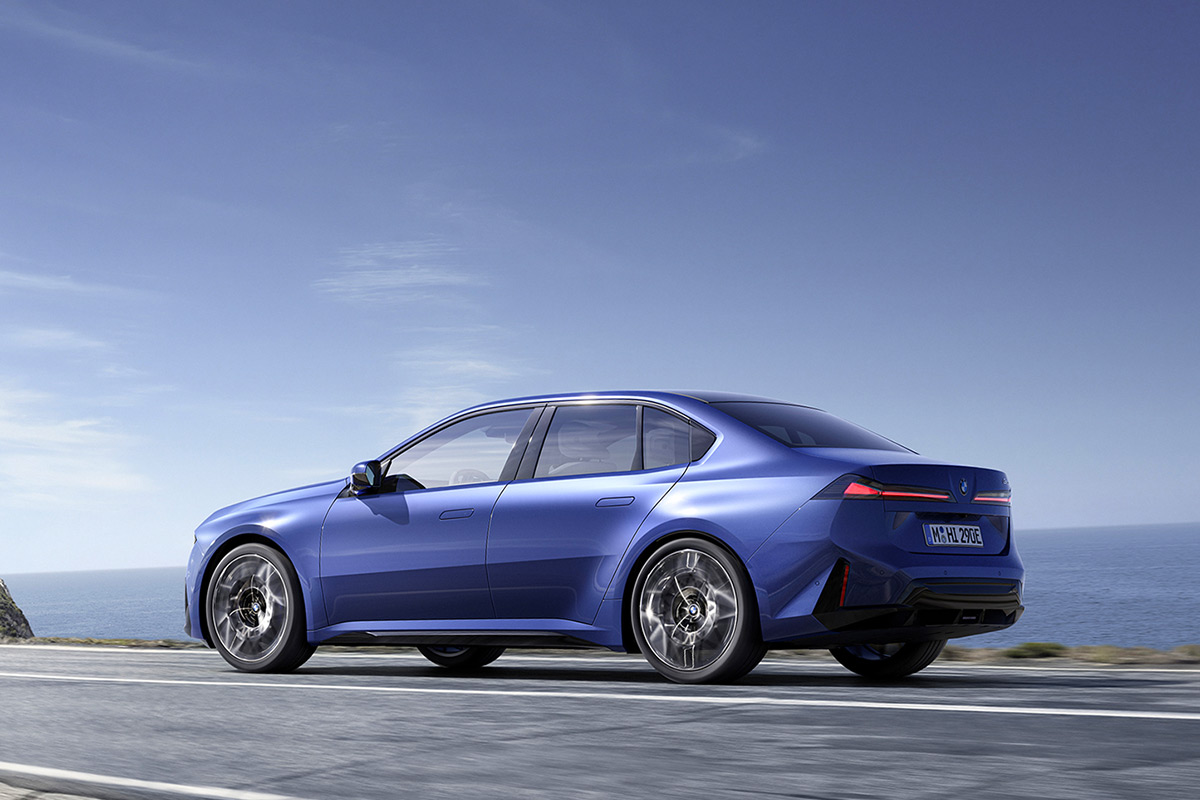
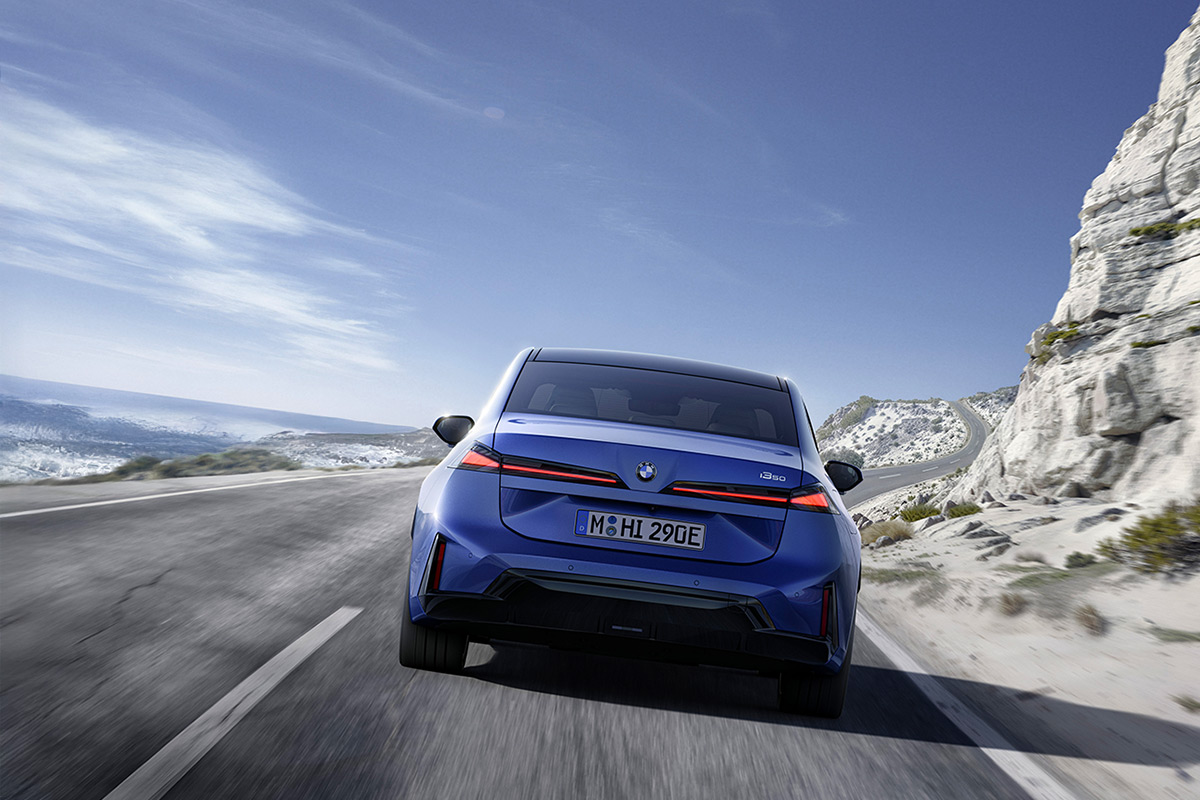
Out back, horizontal rear lights stretch across the full width of the car, emphasizing its broad shoulders and adding visual cohesion. The BMW roundel sits in the valley between the rear lights, a subtle nod to classic 3 Series design DNA. I’m not as thrilled with the rear styling of the car, but maybe it’ll grow on me after a while.
For color, BMW is offering 11 exterior options at launch, including an exclusive new metallic shade called M Le Castellet Blue.
The Interior: A Tech-Forward Cockpit Built For Drivers
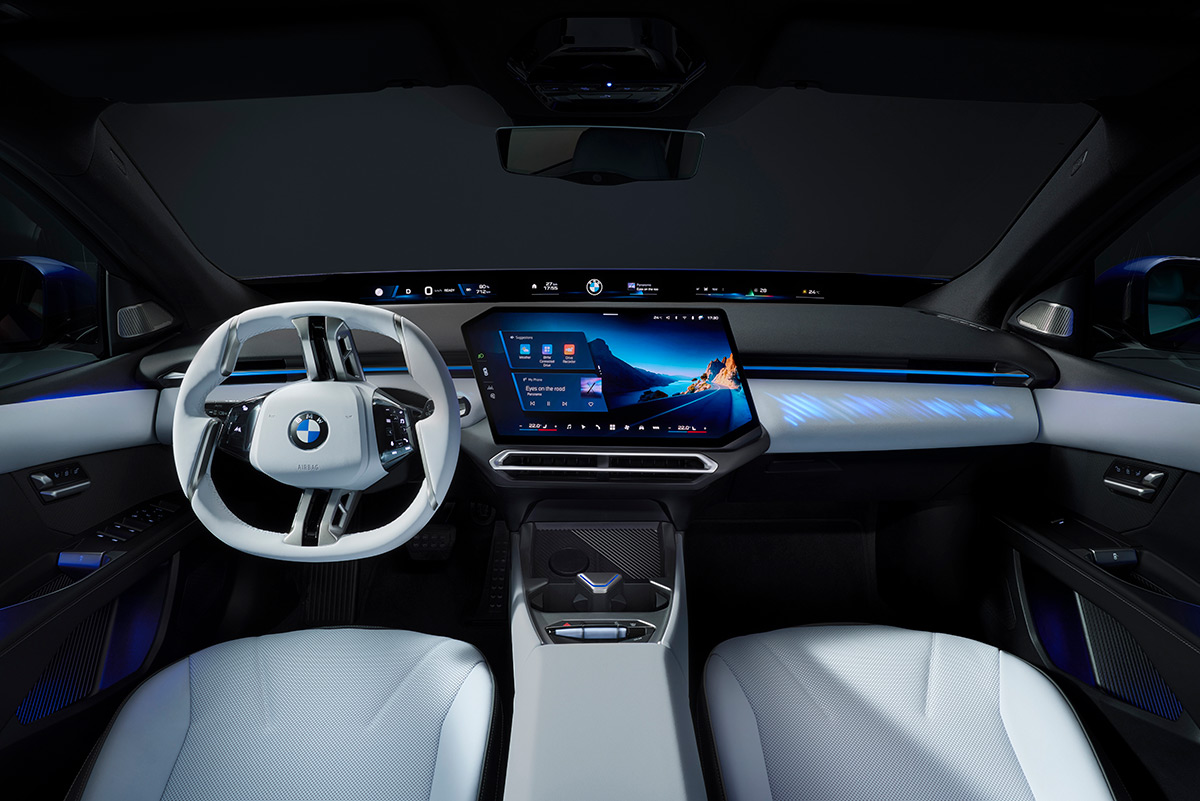
Inside, BMW has gone all-in on its new Panoramic iDrive setup. The centerpiece is the BMW Panoramic Vision, a display that projects driving-critical information across the lower portion of the windshield from A-pillar to A-pillar, keeping your eyes exactly where they belong: on the road.
Paired with an optional BMW 3D Head-Up Display and a pretty massive 17.9-inch central touchscreen in “Free-Cut Design,” the cabin feels genuinely futuristic without losing that driver-first BMW philosophy. The redesigned steering wheel features a center spoke and Shy Tech multifunction controls that only illuminate when relevant – clean, purposeful, and driver-oriented.
Up to seven driver profiles can be stored via BMW ID, meaning every person who gets behind the wheel gets the car configured exactly the way they like it. The BMW Intelligent Personal Assistant, now enhanced with Amazon Alexa+ AI, handles everything from navigation to media to vehicle functions through natural, conversational voice commands.
The Heart Of Joy: BMW’s New Performance Brain
BMW calls its new vehicle dynamics computer the “Heart of Joy,” and it’s not just a marketing name. As one of four high-performance superbrains running the car, this system manages drive, brakes, steering inputs, and recuperation, and it responds ten times faster than previous BMW systems.
The result, according to BMW, is cornering that’s more consistent and predictable, requiring fewer control interventions and delivering a more connected, assured feel through the wheel. An Adaptive M suspension is available as an option for those who want to dial in even sharper dynamics.
Braking has also been refined through a system BMW calls Soft-Stop, which uses the electric motors to handle nearly all deceleration in everyday driving. Physical brakes are reserved for spirited driving or emergency situations, keeping efficiency high and wear low.
Sixth-Gen eDrive And The Battery Behind The Range
The i3’s 440-mile range figure doesn’t happen by accident. It’s the product of BMW’s sixth-generation eDrive technology, which uses new 46mm x 95mm cylindrical battery cells in a cell-to-pack design, meaning the cells go straight into the pack without intermediate modules. This bumps volumetric energy density up 20 percent over the previous generation’s prismatic cells and contributes to a flatter, lower-mounted battery that drops the car’s center of gravity for better handling.
The battery housing itself doubles as a structural component through BMW’s pack-to-open-body construction, saving weight and improving torsional rigidity at the same time.
Powering the rear axle is an electrically excited synchronous motor (EESM), a technology that allows the magnetic field to be dynamically adjusted for maximum efficiency at low loads and maximum torque under hard acceleration. The front axle runs a lighter, more compact asynchronous motor (ASM). Together, BMW says this combination reduces energy losses by 40 percent, drops drive system weight by 10 percent, and cuts manufacturing costs by 20 percent compared to the previous generation.
When Can You Get One?
Production of the new BMW i3 begins at BMW’s Munich plant in August 2026, with the first customer deliveries expected in autumn of this year. The Munich facility is undergoing a major transformation. One year after the i3 goes into production, the plant will shift exclusively to Neue Klasse electric vehicles.
Pricing hasn’t been announced yet, but with 463 horsepower, a 440-mile range, and a design direction that feels like a genuine return to form, the new BMW i3 is shaping up to be exactly what the 3 Series needed to stay relevant in the EV era.











The 2026 Dodge Durango R/T 392 Launch Edition Is A 475HP Family SUV

2027 Nissan Z NISMO Finally Gets Manual Transmission It Always Deserved

Ford Is Giving Buyers Another Shot At The Nürburgring-Slaying Mustang GTD

Princess Cruises Announces Epic 115-Day World Cruise For 2028

Jack Ryan Is Back: ‘Ghost War’ Hits Prime Video This May

Southwest Airlines Facing Backlash After Getting Rid Of Open Seating

TAG Heuer’s New F1 Smartwatch Is Built For Race Fans

Samsung Galaxy S26: Smarter AI, 200MP Camera, New Privacy Display

Polaris Slingshot’s 2026 Signature Edition Is An Absolute Head-Turner

Indian Motorcycle Drops Stunning 125th Anniversary Collection

Watch The Fast And Furious Trailer For ‘Hobbs & Shaw’

A Dance-Off For The Ages Broke Out At Monday Night’s 76ers Game

Netflix Drops ‘Black Mirror: Bandersnatch’ Trailer Ahead Of Release Tomorrow

Former NASA Engineer Gets Revenge On Package Thief With Glitter Bomb

Recent Comments