
Cars
Dreame’s Nebula NEXT 01 JET Edition Is A Rocket-Powered Hypercar!

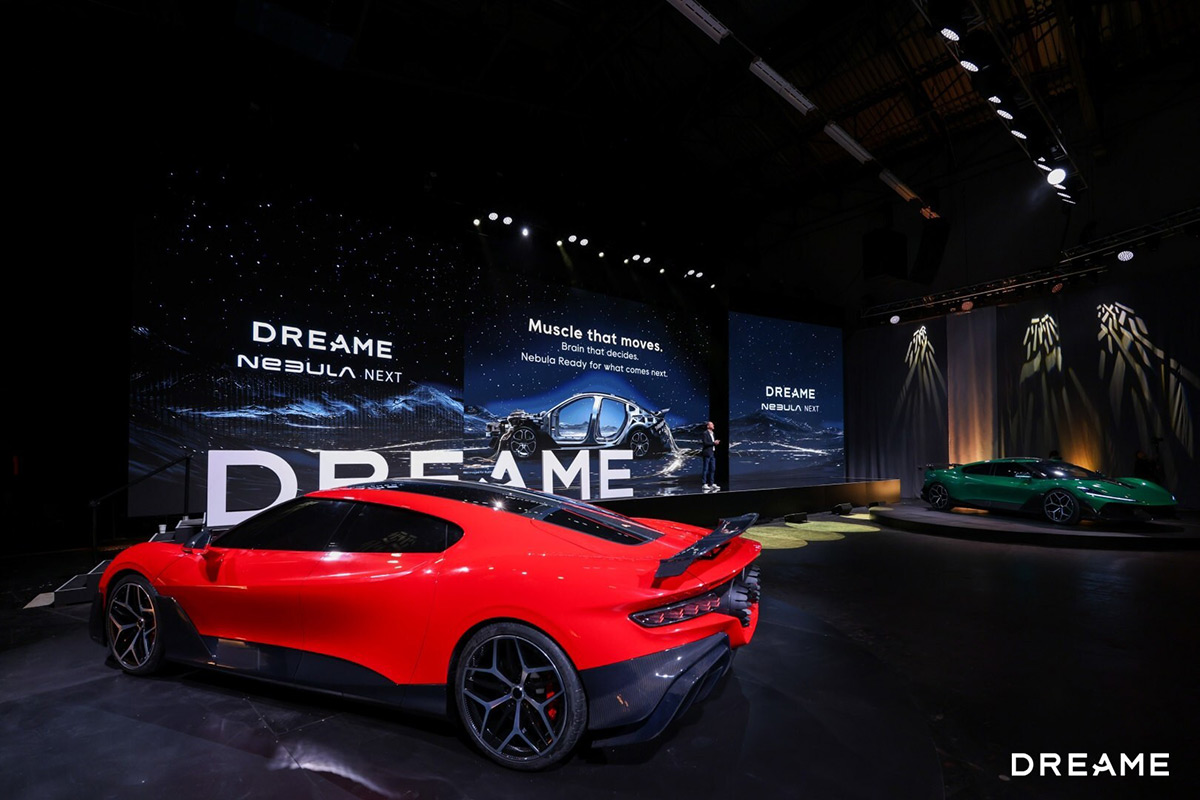
A Chinese vacuum company just built the most insane EV concept on the planet, and it has actual rockets strapped to it.
What Happens When A Tech Company Straps Rockets To A Hypercar?
You get the Dreame Nebula NEXT 01 JET Edition concept. And yes, it’s exactly as unhinged as it sounds.
Dreame Technology, best known for its high-end robotic vacuum cleaners, just pulled off one of the most jaw-dropping car reveals in recent memory. At their DREAME NEXT event in San Francisco last night, the company unveiled a rocket-powered electric hypercar that rockets (pun intended) from 0–60 mph in a staggering 0.9 seconds. To put that in perspective, even the fastest production hypercars on the planet need nearly twice that long to get there.
“In all my life, I’ve never seen a product announcement as exciting as this,” said Sebastian Thrun, a Stanford University professor widely regarded as the father of modern autonomous vehicles and founder of Google X Lab, Udacity, and Kitty Hawk, who attended the launch.
When the guy who helped invent self-driving cars says that about your car launch, you know you’ve done something special.
The Rocket System: 100 kN of Pure, Controlled Insanity
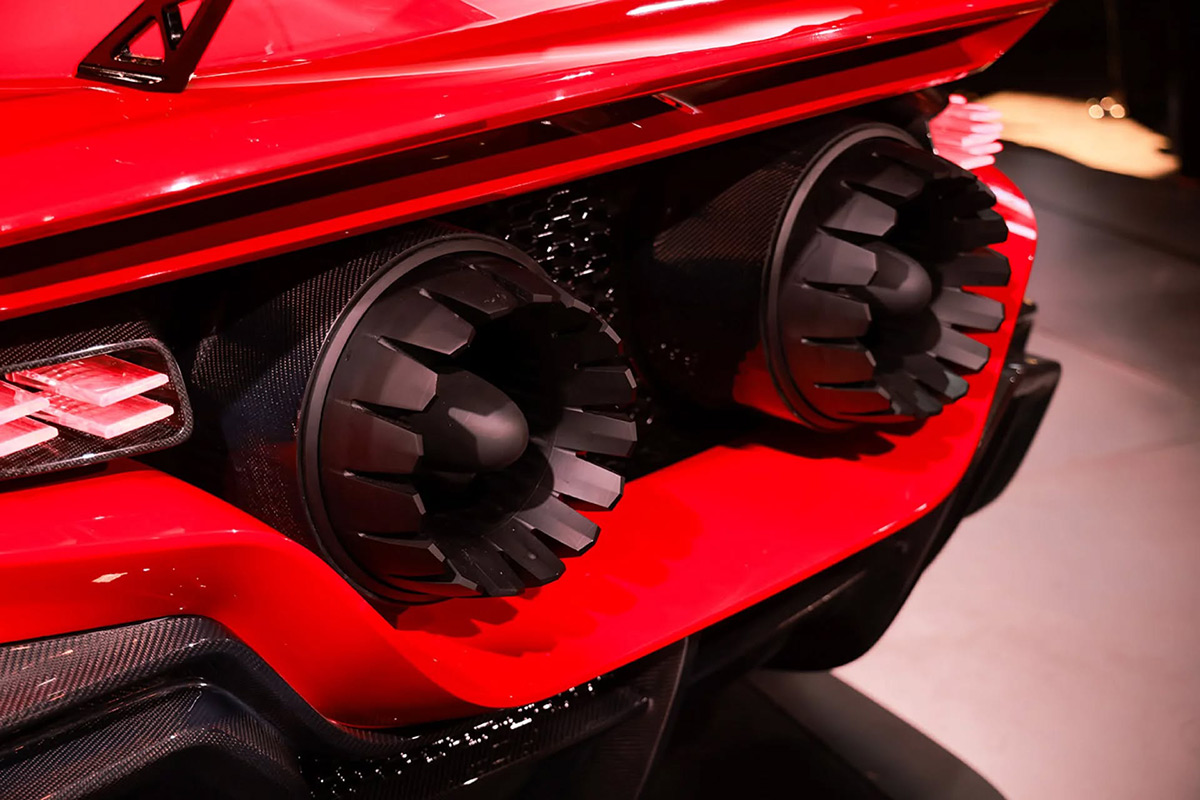
The headline spec on the Nebula NEXT 01 JET Edition is its custom-built dual solid-fuel rocket booster system. Here’s what that actually means in numbers:
- Peak thrust: 100 kN (that’s roughly 22,500 lbs of force)
- Response time: 150 milliseconds
- 0–62 mph: 0.9 seconds
This isn’t a gimmick bolted on for a YouTube video. The rockets are integrated directly into the chassis of an already-monstrous electric hypercar that in its base form produces an incredible 1,876 horsepower from four electric drive motors and runs 0–62 mph in 1.8 seconds. Dreame apparently looked at that number and decided it wasn’t fast enough.
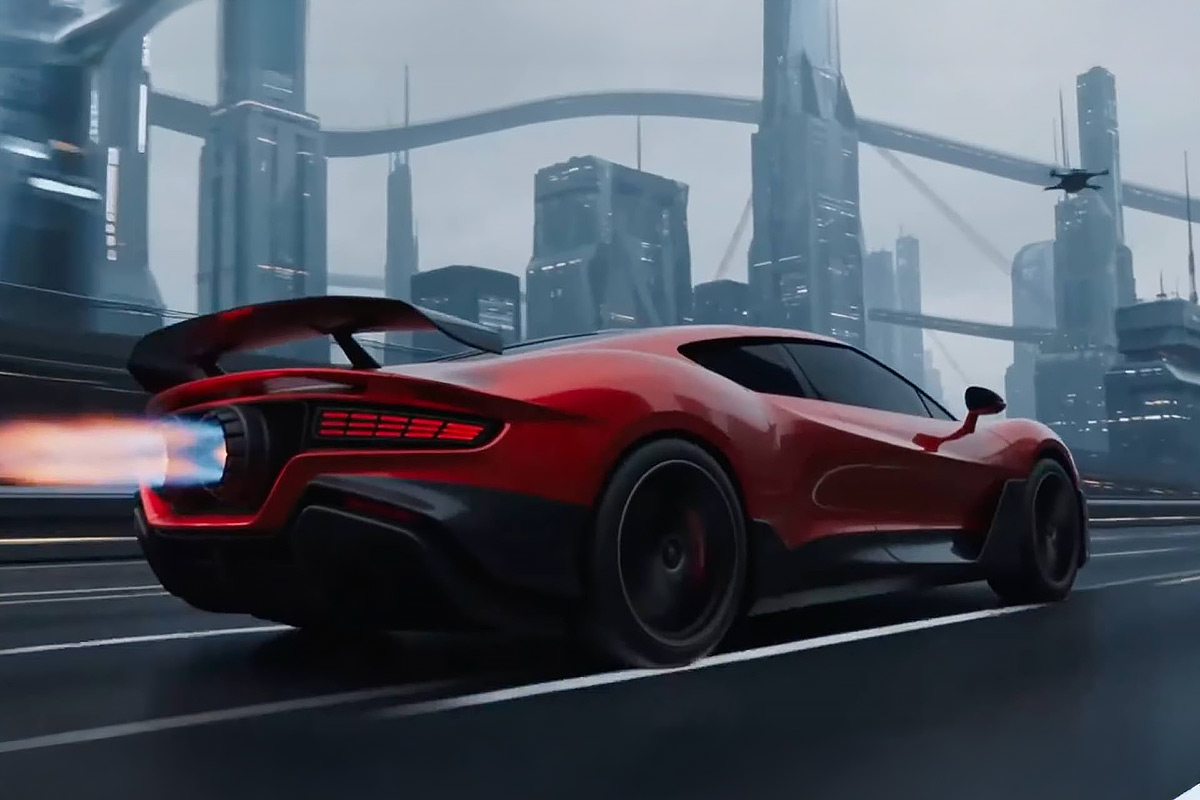
To be clear, there are some real-world caveats here. Much like the legendary (and gloriously dangerous) Turbonique rocket drag racing parts of the 1960s, you can’t partially throttle a solid-fuel rocket. Once it’s lit, you’re committed. You get one burst of acceleration, it’s all or nothing. Road-legal? Not anytime soon. Bonneville Salt Flats worthy? Absolutely.
The Intelligent Chassis: Because Raw Power Needs A Brain
All that thrust would be completely useless, and frankly terrifying, without the engineering to manage it. Dreame’s intelligent chassis is just as impressive as the rockets.
Built on a fully wire-controlled architecture with a 14-degree-of-freedom, non-linear control system, the chassis delivers a response time of under 1 millisecond. That’s faster than your nervous system can process what’s happening. The system uses electromagnetic active suspension and dry wire-controlled braking to pull off a turning radius of less than 5 meters, while cutting energy consumption by more than 50%. It even supports advanced maneuvers like tank turns and tire-burst stabilization – the kind of stuff you’d expect on a military vehicle, not a street car.
Next-Gen LiDAR: The DHX1 Changes What Cars Can “See”
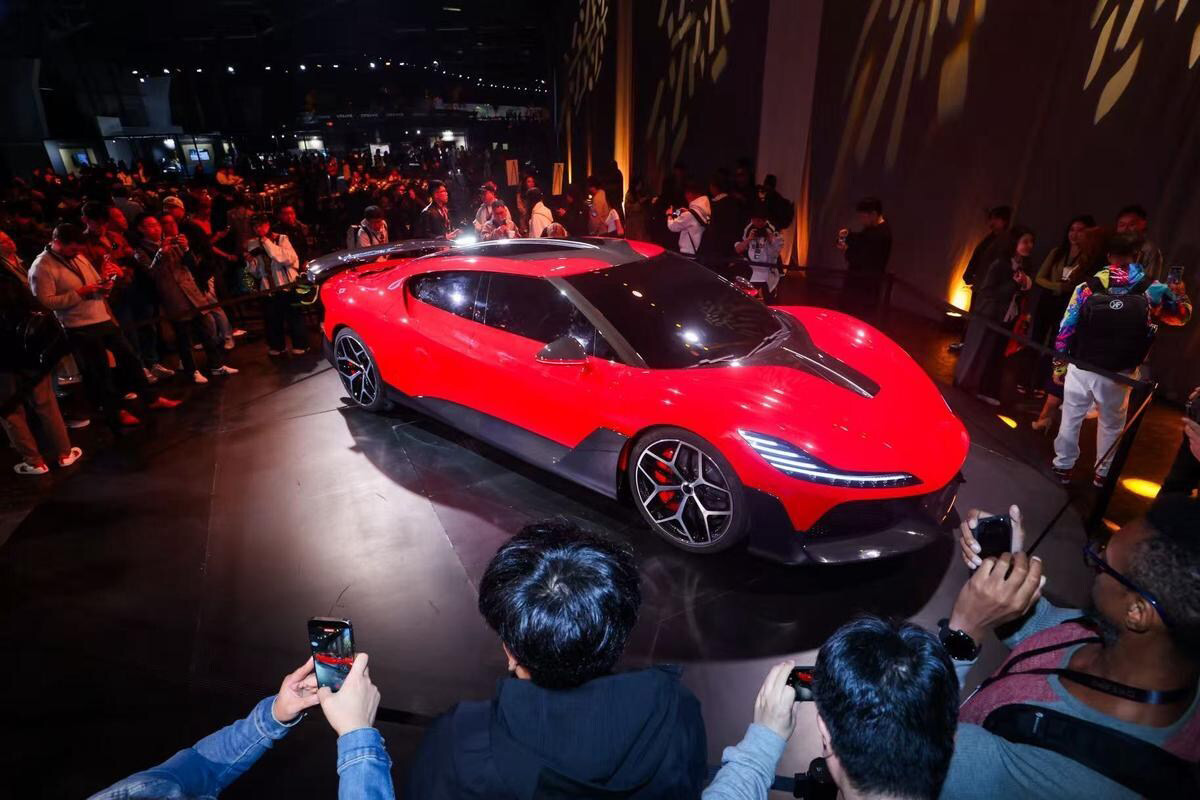
Alongside the JET Edition, Dreame unveiled the DHX1, the first LiDAR unit developed under the Nebula Next program, and it’s a genuine leap forward in what autonomous and driver-assist systems can perceive.
Where conventional automotive LiDAR produces rough point-cloud outlines of the road ahead, the DHX1 operates at what Dreame calls ultra-high-definition image-level sensing. That means it can resolve fine details at distance that today’s systems simply miss: potholes, small stones, traffic signs, and subtle pedestrian movements. This is the kind of perception technology that makes the difference between a car that reacts and a car that anticipates.
Autonomous Driving Built For The Real World
The Drive Next segment of the event also pulled back the curtain on Dreame’s autonomous driving platform, built on a third-generation VLA and World Model architecture. The platform comes in two tiers:
- L2++: Full-scenario urban navigation from parking spot to parking spot – no highway-only limitations
- L3+: Built on a top-tier computing platform and designed for fully unmanned autonomous driving
The vehicle also utilizes CTP 4.0 battery integration technology, which removes the traditional crossbeams and longitudinal beams from the battery pack to free up vertical space in the chassis, a structural innovation that benefits both performance and interior packaging.
Solid-State Battery Tech That Could Change The Industry
One of the most underreported details from the DREAME NEXT event is the company’s new sulfide-based solid-state battery. In lab conditions, its single-cell energy density exceeds 450 Wh/kg with a capacity of 60 Ah – significantly ahead of current lithium-ion technology.
More importantly, the design aims to eliminate the root causes of battery-related fires and accidents, not just manage them. The battery is currently entering the mass-production preparation phase, which means this isn’t vaporware, it’s coming.
From Tsinghua University To The Bonneville Salt Flats
None of this came out of nowhere. Dreame’s move into smart vehicles stretches back more than a decade, rooted in the early days of the SkyAxis Program at Tsinghua University, where founder Yu Hao and his team first explored autonomous driving.
Those early experiments planted the seeds for the Nebula NEXT, and the JET Edition is the direct result of 10+ years of tech development across motors, algorithms, robotics, and AI.
The same engineering that pushes Dreame’s high-speed digital motors to 200,000 RPM in their consumer products is now being applied to automotive powertrains and perception systems. It’s a unified engineering vision that connects a robot vacuum to a rocket car, and somehow it makes total sense.
What Comes Next?
Is the Dreame Nebula NEXT 01 JET Edition going to be street-legal anytime soon? No. But is it the most legitimately exciting hypercar concept to come out of 2026 so far? Without question.
Between the rocket propulsion, the sub-millisecond chassis response, the industry-leading LiDAR, and a solid-state battery that could reshape EV technology, Dreame has announced themselves as a serious player in the automotive space in the most spectacular way possible.
Sometimes the best way to launch a car is to literally launch it. 🚀



Spirit Airlines Is Gone: What Happened And What Travelers Need To Know

2026 Corvette ZR1X Pace Car Is Part Racecar, Part Patriotic Masterpiece

Dreame’s Nebula NEXT 01 JET Edition Is A Rocket-Powered Hypercar!

Subway Just Dropped Its First-Ever Value Menu, With 15 Items Under $5

Gyroor C1 Plus: The Electric Scooter That Actually Carries Your Stuff

Chevrolet Unveils The 2027 Corvette Grand Sport With A Brand-New V8

INFINITI Just Unveiled The 2027 QX65, And It’s An Absolute Stunner!
Gyroor C1 Plus: The Electric Scooter That Actually Carries Your Stuff

Hyundai’s Boulder Concept Is A Body-On-Frame Beast We Never Saw Coming

The Hunger Games Is Back, And This Trailer Is Absolutely Brutal

Watch The Fast And Furious Trailer For ‘Hobbs & Shaw’

A Dance-Off For The Ages Broke Out At Monday Night’s 76ers Game

Netflix Drops ‘Black Mirror: Bandersnatch’ Trailer Ahead Of Release Tomorrow

Former NASA Engineer Gets Revenge On Package Thief With Glitter Bomb

Recent Comments