
Auto Essentials
How To Jump Start A Car With A Dead Battery: Your Complete Guide

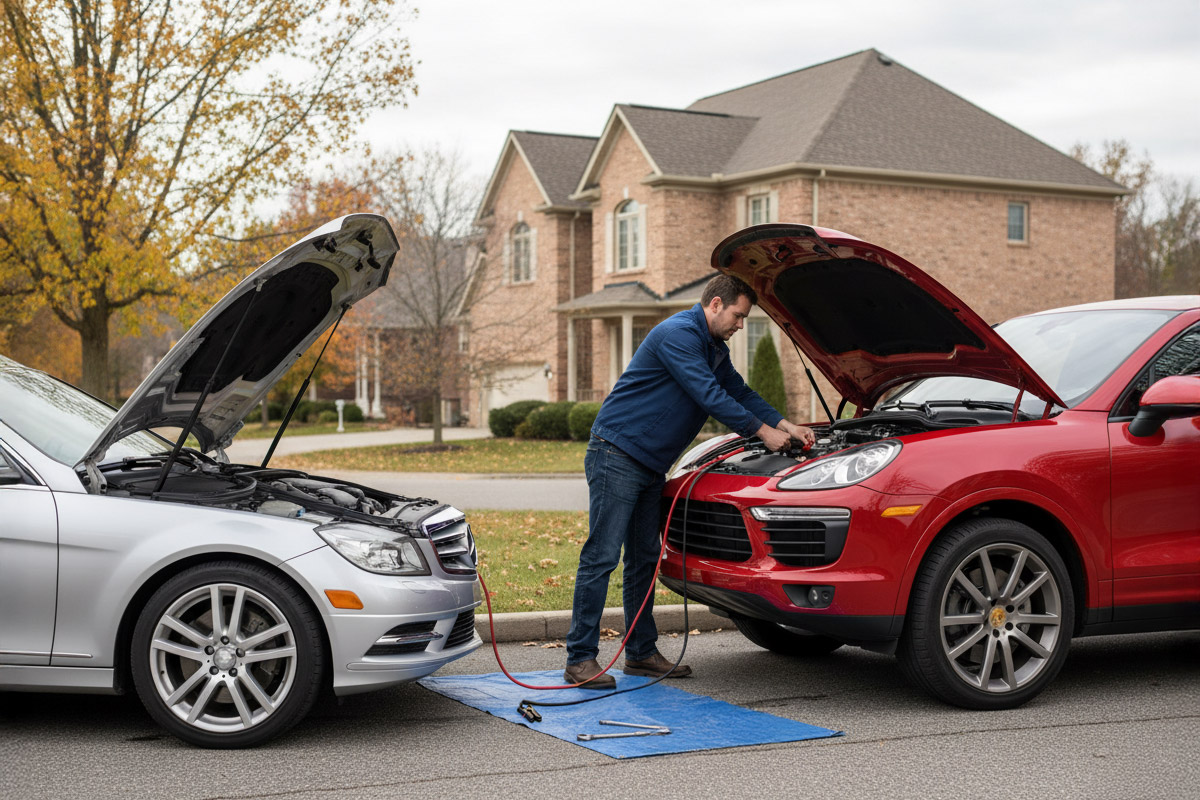
Jump-starting a dead car battery takes 5-10 minutes using jumper cables and another vehicle, a portable jump starter, or push-starting a manual transmission car down a hill. Mastering these three methods means you’ll never wait hours for roadside assistance ($75-150 per call) or get stranded in parking lots, driveways, or highway shoulders. This guide covers every method with safety checks, step-by-step instructions, and common mistakes that damage your car’s electrical system.
Dead batteries happen to everyone. You left the headlights on overnight. Your car sat unused for two weeks. Extreme cold drained the charge. Whatever the reason, knowing how to jump-start saves time, money, and the hassle of flagging down strangers or waiting for AAA.
Before You Jump Start: Confirm It’s Actually The Battery
Turn your key and listen. If you hear rapid clicking or the engine cranks slowly but won’t start, that’s a dead or weak battery. But if you hear absolutely nothing – no clicks, no lights, no dashboard – check your battery terminals for corrosion first.
If the engine cranks normally but won’t fire up, your problem isn’t the battery. A jump-start won’t help issues like a faulty fuel pump, bad spark plugs, or an empty gas tank.
Safety Check Your Battery
Before connecting anything, inspect your battery:
Look for cracks or bulges in the battery case. A damaged battery can leak acid or explode when jumped. If that’s the case, don’t risk it, call for a tow.
Check for leaking fluid or a sulfur smell. That rotten-egg odor means that electrolyte is escaping. Again, don’t jump-start a leaking battery.
Remove corrosion from terminals. White, blue, or green crusty buildup can prevent good electrical contact. Scrape it off with a wire brush, screwdriver, or even a rag. Wear gloves if possible, because battery acid burns.
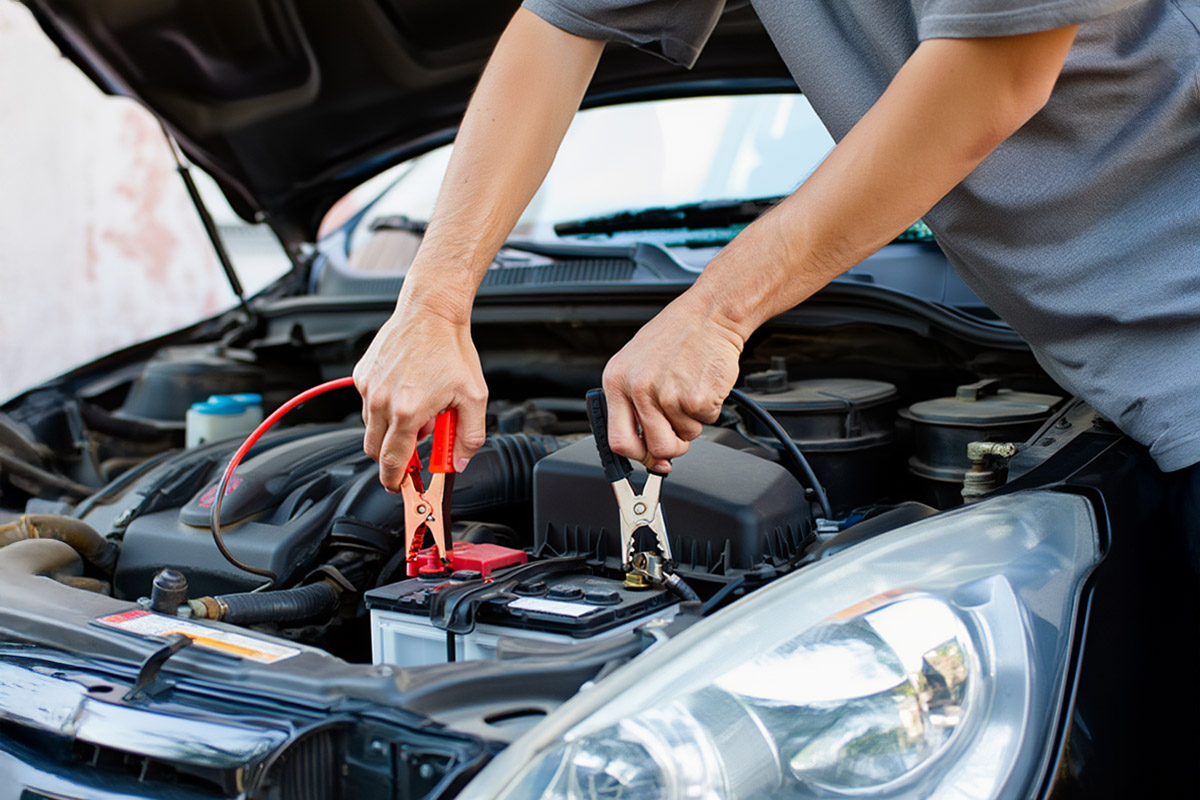
Method 1: Jump Starting With Cables And Another Vehicle
This classic method works when you have jumper cables and someone willing to help. Quality cables matter; cheap thin cables can overheat or fail to deliver enough current. Look for 4-6 gauge cables at least 12-16 feet long.
Setup: Position The Vehicles
- Park the working vehicle close enough that cables reach both batteries, but the cars should NOT touch.
- Turn off both vehicles completely: engine, lights, radio, climate control, everything
- Engage parking brakes on both vehicles
- Pop both hoods and locate the batteries
Connect The Cables In The Correct Order
While jump-starting a car isn’t that difficult, connecting the jumper cables incorrectly are a common and potentially costly error. Even a short reversal of electrical polarity can damage fragile electronics, blow fuses, and ruin control modules. As such, use the following sequence to jump-start your car:
Step 1: Attach one red clamp to the POSITIVE (+) terminal of the dead battery
Step 2: Attach the other red clamp to the POSITIVE (+) terminal of the good battery
Step 3: Attach one black clamp to the NEGATIVE (-) terminal of the good battery
Step 4: Attach the final black clamp to bare, unpainted metal on the dead car’s engine block—NOT the negative battery terminal. Good grounding spots include engine mounting brackets, bolts, or the alternator bracket.
Why ground to the engine instead of the battery? If your dead battery is releasing hydrogen gas (which is explosive), a spark at the terminal could ignite it. Grounding to the engine keeps that spark away from the battery.
Start The Vehicles
- Start the working vehicle and let it run for 2-3 minutes. This charges the dead battery slightly.
- Try starting the dead vehicle. If it cranks but doesn’t start, wait another minute and try again.
- If it doesn’t start after 3-4 attempts, your battery might be completely shot or another issue exists. Don’t keep trying, as you’ll overheat the cables.
Remove Cables In Reverse Order
Once the dead car starts, remove the cables in the reverse order that you connected them:
- Remove the black clamp from the engine ground
- Remove the black clamp from the good battery
- Remove the red clamp from the good battery
- Remove the red clamp from the formerly dead battery
Critical: Let the jumped car run for at least 20-30 minutes to recharge the battery. Drive it, don’t just let it idle, as you need the alternator do its thing. Highway driving charges faster than city stops and starts. If you shut off the engine too soon, you’ll need another jump.
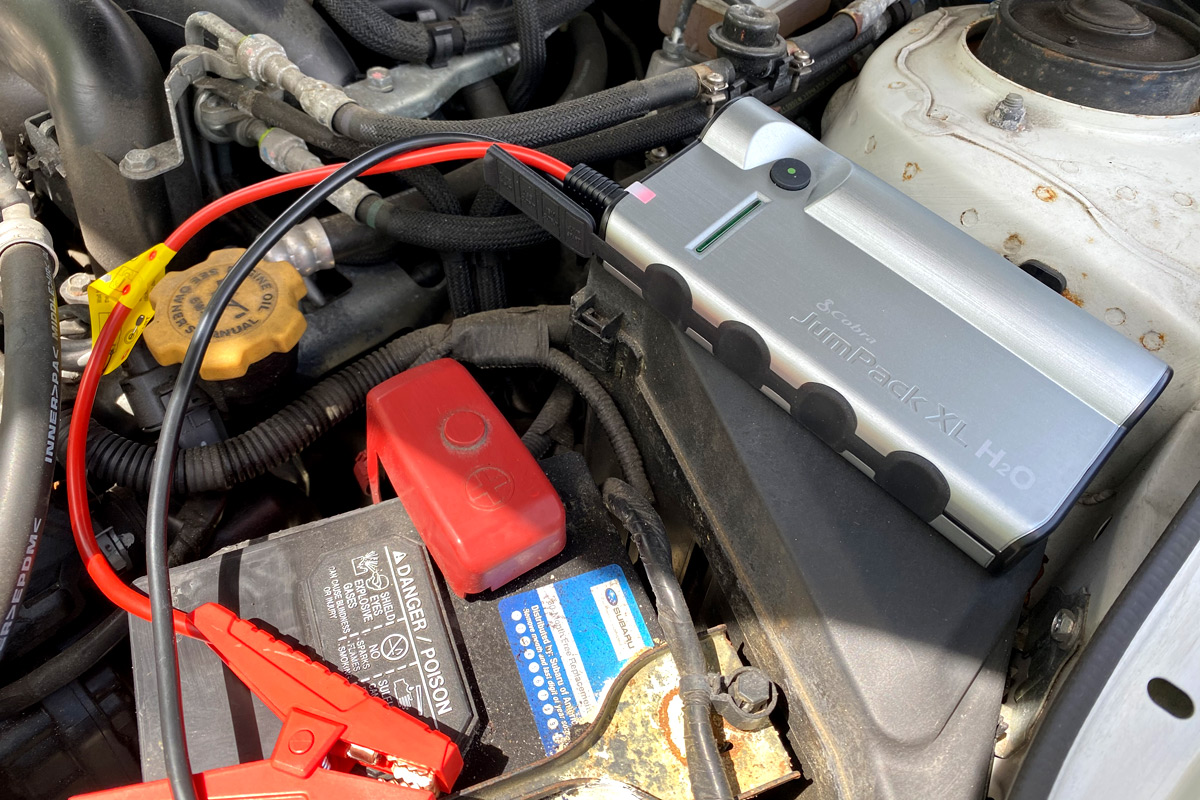
Method 2: Using A Portable Jump Starter (Jump Box)
Portable jump starters / jump packs have gotten incredibly compact and powerful. The modern lithium-ion models weigh 2-4 pounds, fit in your glove box, and deliver 1,000-4,000 peak amps – enough to start most vehicles multiple times per charge.
Why Jump Boxes Beat Cables
It’s pretty simple, you don’t need another vehicle. You’re self-sufficient in empty parking lots, on road trips, or at 2 AM when nobody’s around. Most models include USB ports to charge phones, LED flashlights, and some even pack built-in tire inflators.
Recommended Jump Starters For 2026
Based on extensive testing, these models consistently perform:
NOCO Boost Plus GB40 UltraSafe Jump Starter – Best overall for most drivers. 1,000 peak amps handles 6.0L gas and 3.0L diesel engines. Compact, spark-proof, and includes safety features that prevent reverse polarity mistakes. Around $100.
GOOLOO GT6000 Jump Starter – Most powerful consumer option. 6,000 peak amps starts heavy-duty diesels up to 12 liters. 27,000 mAh capacity means multiple jumps. 100W USB-C fast charging. About $180.
Battery Tender 800 AMP Jump Starter and Tire Inflator – Best for dual-purpose. Built-in 140 PSI tire inflator plus jump-starting capability for 6.0L gas engines. Ideal if you also want air pump capabilities. Around $120.
AstroAI S8 Car Battery Jump Starter – Best budget pick. 1,000 peak amps, fits in backseat pockets. Three-mode flashlight. Good for occasional use. Affordable at $60-70.
How To Use A Portable Jump Starter
Most portable jump pack units follow this process, but double-check the instruction manual that came with yours to be sure:
- Turn off your vehicle
- Attach the red clamp to the POSITIVE battery terminal
- Attach the black clamp to the NEGATIVE battery terminal (you can clamp directly to the battery with jump boxes unlike cables)
- Turn on the jump starter unit
- Wait 30 seconds for it to prime
- Start your vehicle
- Once started, turn off the jump starter and disconnect clamps (black first, then red)
Important: Some jump starters require pressing an override button if your battery is severely depleted – they detect extremely low voltage and won’t engage without confirmation. Check your unit’s manual to see if this is the case.
Maintaining Your Jump Starter
Recharge every 3-6 months even if you haven’t used it, as lithium batteries lose charge sitting idle. Store in moderate temperatures, as extreme heat or cold in your trunk degrades battery life. Most units last 3-5 years with proper care.
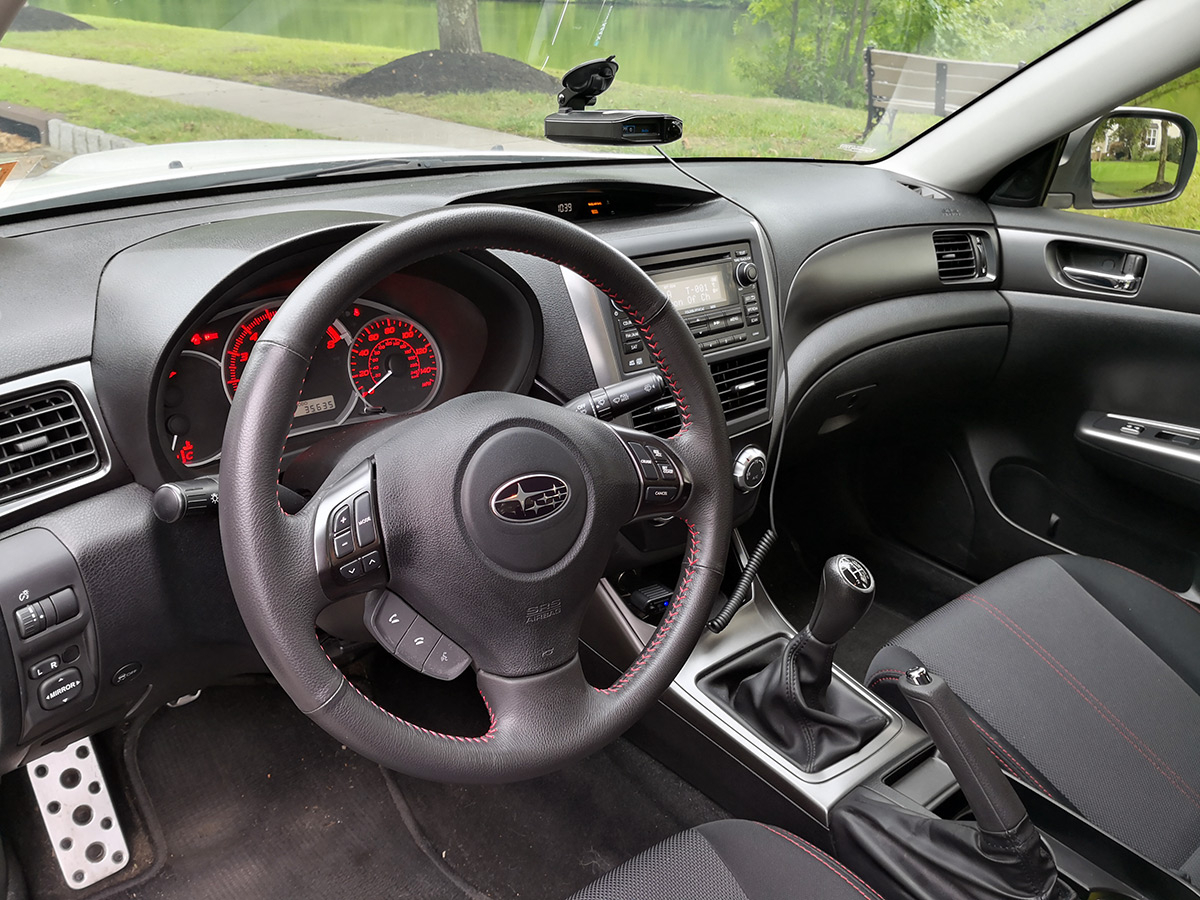
Method 3: Push Starting A Manual Transmission
If you drive a manual transmission and have no cables or jump box, you can push-start your car. This technique uses the vehicle’s momentum to spin the engine and start it without the starter motor.
Can Modern Cars Be Push Started?
Most fuel-injected cars with manual transmissions can be push started if the car’s battery has SOME charge, enough to power the fuel pump, injectors, and ignition system. If your battery is 100% dead (dashboard completely dark), push starting probably won’t work.
Some manufacturers specifically warn against push starting in their owner’s manuals, citing potential damage to catalytic converters or fuel systems. Check your manual first. Older vehicles with carburetors and mechanical fuel pumps are easiest to push start.
How To Push Start Your Car
Find the right location. You will need a gentle downhill slope or flat area with 2-3 people to push. Avoid steep hills where you might lose control, because power steering and power brakes won’t work without the engine running.
Prepare the vehicle:
- Turn the ignition to ON (not START), as this powers the fuel system
- Press the clutch fully and shift into 2nd gear (not 1st—2nd reduces the jolt when the clutch engages)
- Keep your foot on the clutch
Get moving:
- Have friends push or let gravity pull you downhill to 5-10 mph
- Once you’re rolling at jogging speed, quickly release the clutch while giving slight gas
- The engine should turn over and fire. If it starts, press the clutch again to prevent stalling
- Shift to neutral and let it idle, then drive normally
If it doesn’t start on the first try: Press the clutch, let the car coast, and pop the clutch again. Try 2-3 times. If it still won’t start, the battery is likely too dead or another problem exists.
What If Your Battery Won’t Hold A Charge?
If your battery dies repeatedly, even after jumping, you likely need a replacement. Car batteries typically last 3-5 years depending on climate and usage.
Signs Your Battery Is Dying
The engine cranks slowly even when the battery seems charged. Batteries lose cranking amps over time. Eventually they can’t deliver the surge needed to start the engine.
Your headlights dim significantly when starting the car. Watch your dashboard lights. If they brown out heavily when cranking, your battery is weak.
The battery is 3+ years old. Most warranties cover 3 years for good reason. Beyond that, failure rates spike.
You see corrosion building up repeatedly. Excessive corrosion indicates the battery is off-gassing from overcharging or internal failure.
The check engine light comes on with no other symptoms. Sometimes weak batteries trigger voltage-related sensor codes.
Other Common Dead Battery Causes
Parasitic drain: Something continues drawing power when the car is off. Common culprits include aftermarket stereos, dash cams, alarm systems, or faulty door switches keeping interior lights on.
Failing alternator: If your alternator isn’t charging the battery while driving, it will die again quickly. After jump-starting, watch your dashboard battery light. If it stays on while driving, the alternator has failed.
Short trips only: The alternator needs 20-30 minutes of driving to fully recharge a battery. If you only drive 5-10 minutes at a time, the battery never fully charges and will gradually die.
Extreme temperatures: Both severe cold and extreme heat kill batteries faster. Cold weather reduces chemical reactions in the battery. Heat causes internal degradation and evaporation.
Common Jump-Starting Mistakes That Damage Cars
Connecting cables wrong creates massive electrical surges. Reversing positive and negative cables can fry your car’s computer, blow fuses, or destroy the battery entirely. Double-check before connecting.
Letting cables touch while connected causes dangerous sparks. Keep the red and black clamps separated. If they touch while carrying current, you’ll create sparks, potentially ignite battery gases, and damage the cables.
Jumping newer vehicles with much older vehicles sometimes causes problems. Modern cars have sensitive electronics. Older vehicles with worn alternators can send voltage spikes through the cables when revved. If possible, use a newer vehicle as the donor or use a portable jump starter instead.
Not letting the jumped car run long enough. If you shut off the engine 5 minutes after jumping, you’ll be stranded again. Drive for 30+ minutes or use a battery charger overnight.
Jump starting in the rain without precautions. While not impossible, water and electricity don’t mix. If you must jump in wet conditions, make sure connections are clean and tight, avoid standing in puddles, and work quickly.
When To Call For Help Instead
Some situations require professional assistance:
- Your battery is cracked, leaking, or swollen
- You smell sulfur or see battery acid
- You’ve tried jumping multiple times and the car won’t start
- You’re on a busy highway shoulder with no safe workspace
- You’re uncomfortable working under the hood
Roadside assistance costs $75-150 per call, but it’s worth it when safety is questionable or the situation is beyond your skill level.
Now You’re Ready To Jump Start Your Car
Every driver should know at least one method to jump-start a dead battery. Be sure to keep jumper cables in your trunk ($20-40 for quality cables) or invest in a portable jump starter ($60-180 depending on power needs). And if you drive a manual transmission, learn the push-start technique as a backup.
The 10 minutes spent learning these skills will pay off the first time your battery dies in a grocery store parking lot at 9 PM. You’ll get home without waiting hours for help, spending $150 on a tow truck, or asking strangers for assistance.
Now you know exactly what to do when you turn that key and hear nothing but clicking.



Southwest Airlines Facing Backlash After Getting Rid Of Open Seating

Samsung Galaxy S26: Smarter AI, 200MP Camera, New Privacy Display

Indian Motorcycle Drops Stunning 125th Anniversary Collection

Polaris Slingshot’s 2026 Signature Edition Is An Absolute Head-Turner

TAG Heuer’s New F1 Smartwatch Is Built For Race Fans

The Mandalorian and Grogu Trailer Is Here, And It Looks So Good!
Southwest Airlines Facing Backlash After Getting Rid Of Open Seating

2027 Audi RS5 PHEV Is What Happens When Engineers Have No Limits

Apple Is Building Three AI Wearables, And Development Is Speeding Up

Krispy Kreme and OREO Team Up For New Limited-Edition Doughnut Drop

Watch The Fast And Furious Trailer For ‘Hobbs & Shaw’

A Dance-Off For The Ages Broke Out At Monday Night’s 76ers Game

Netflix Drops ‘Black Mirror: Bandersnatch’ Trailer Ahead Of Release Tomorrow

Former NASA Engineer Gets Revenge On Package Thief With Glitter Bomb

Joshua
May 30, 2011 at 1:25 am
I’ve tried to drill these steps in customers heads. I run a roadside assistance company, and most of my calls come from people with jumper cables parked in a lot full of cars. Most people will lend their cars for free for a jump. I shouldn’t be making $35 for this. Not really complaining though lol.