
Grooming
How To Shave Your Head: A Complete Guide For Beginners


If you’ve ever thought about shaving your head, you’re not alone. It’s a bold choice that’s being increasingly embraced by men seeking a fresh, powerful look or a simplified grooming routine. For some, it symbolizes a new beginning; for others, it’s about practicality & low maintenance. Either way, achieving that perfectly smooth scalp goes beyond mere aesthetics – it requires the right technique, quality tools, and proper care.
Whether you’re dealing with hair loss, want to try a new look, or simply prefer the convenience of a shaved head, this comprehensive guide (written by someone who has been shaving their head for the greater part of 20 years now) will walk you through everything you need to know.
Why Shave Your Head?
Before diving into the how-to, let’s explore why so many men are choosing this look:
- Low maintenance: Say goodbye to expensive haircuts and styling products
- Confidence boost: Own your look rather than hiding thinning hair
- Professional appearance: A well-maintained shaved head looks sharp and intentional
- Beat the heat: Stay cooler in warm weather
- Athletic edge: Popular among athletes for aerodynamics and hygiene
- Fresh start: Sometimes a dramatic change helps mark a new chapter
Preparing Your Scalp for the First Shave
Proper preparation is crucial for achieving a smooth, comfortable shave without irritation.
Step 1: Trim Long Hair First
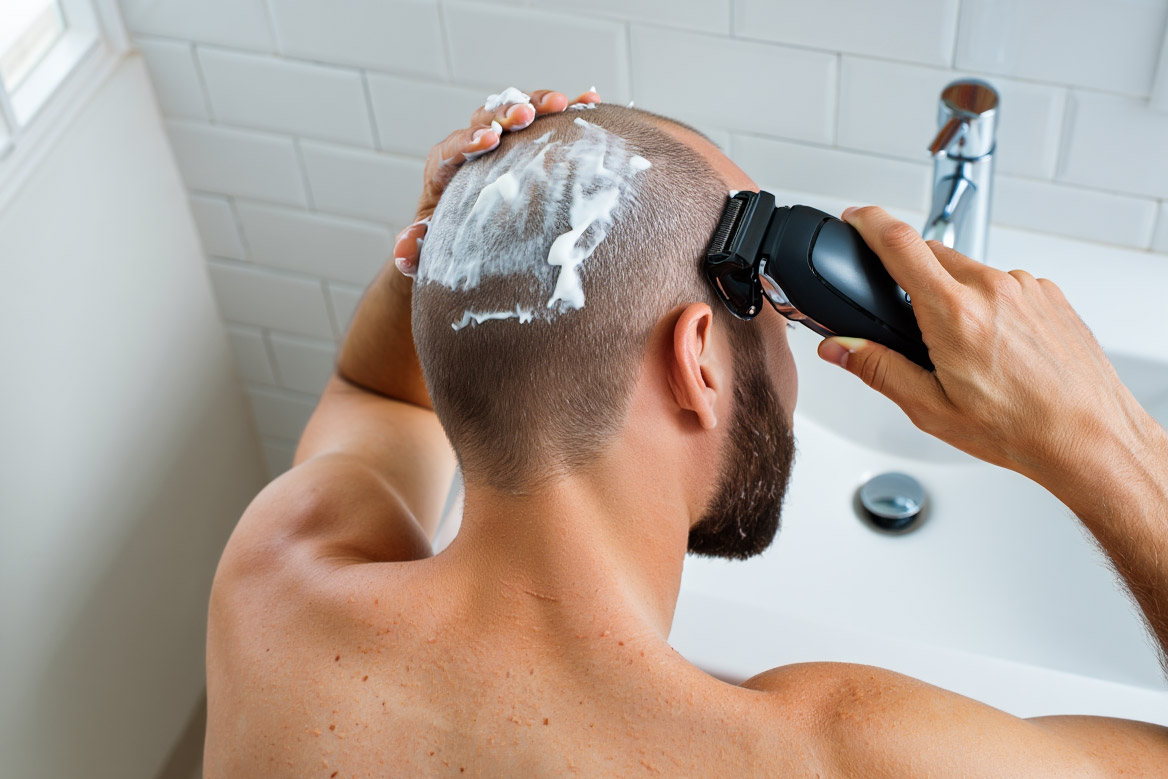
If you’re starting with longer hair, use clippers to trim it down to 1/4 inch or shorter. This prevents your razor from clogging and makes the actual shaving process much easier. Start with a longer guard and work your way down until you’re comfortable going shorter.
Step 2: Soften Your Hair and Scalp
The best time to shave your head is during or immediately after a hot shower. The heat and moisture soften the hair follicles and open pores, making for a smoother shave with less resistance. If you can’t shower first, apply a warm, damp towel to your head for 3-5 minutes.
Step 3: Apply Quality Shaving Gel
Never shave dry. A good shaving gel or cream creates a protective barrier between your skin and the blade, reducing friction and preventing irritation. Look for products with:
- Aloe vera for soothing properties
- Moisturizing agents like glycerin
- Anti-inflammatory ingredients
- Clear or translucent formulas so you can see what you’re doing
Apply a generous layer and let it sit for 30-60 seconds before you begin shaving.
Choosing the Right Tools
The tools you select can make the difference between a smooth scalp and a patchy, irritated disaster.
Razor Options
Manual Razors
- Multi-blade cartridge razors (3-5 blades) provide close, comfortable shaves
- Pivoting heads follow scalp contours more easily
- Options with built-in lubricating strips add extra protection
- Premium options like heated razors mimic hot towel shaves for added comfort
Safety Razors
- More affordable long-term (cheaper blade replacements)
- Single blade reduces ingrown hairs for some people
- Requires more skill and a lighter touch
- Eco-friendly option with less plastic waste
Electric Razors
- Best for maintaining an already-shaved head
- Convenient for quick touch-ups
- Won’t give quite as close a shave as manual razors
- Better for sensitive skin prone to irritation
Key Feature to Look For: Whatever razor type you choose, ensure it has good blade quality and replaceable heads. Dull blades are your enemy, they pull hair rather than cutting cleanly, leading to irritation and ingrown hairs.
Essential Accessories
- Hand mirror: Critical for seeing the back and sides of your head
- Good lighting: Natural light or bright bathroom lighting prevents missed spots
- Sharp scissors or clippers: For initial trimming
- Exfoliating scrub: Use 2-3 times weekly to prevent ingrown hairs
The Shaving Process: Step-by-Step
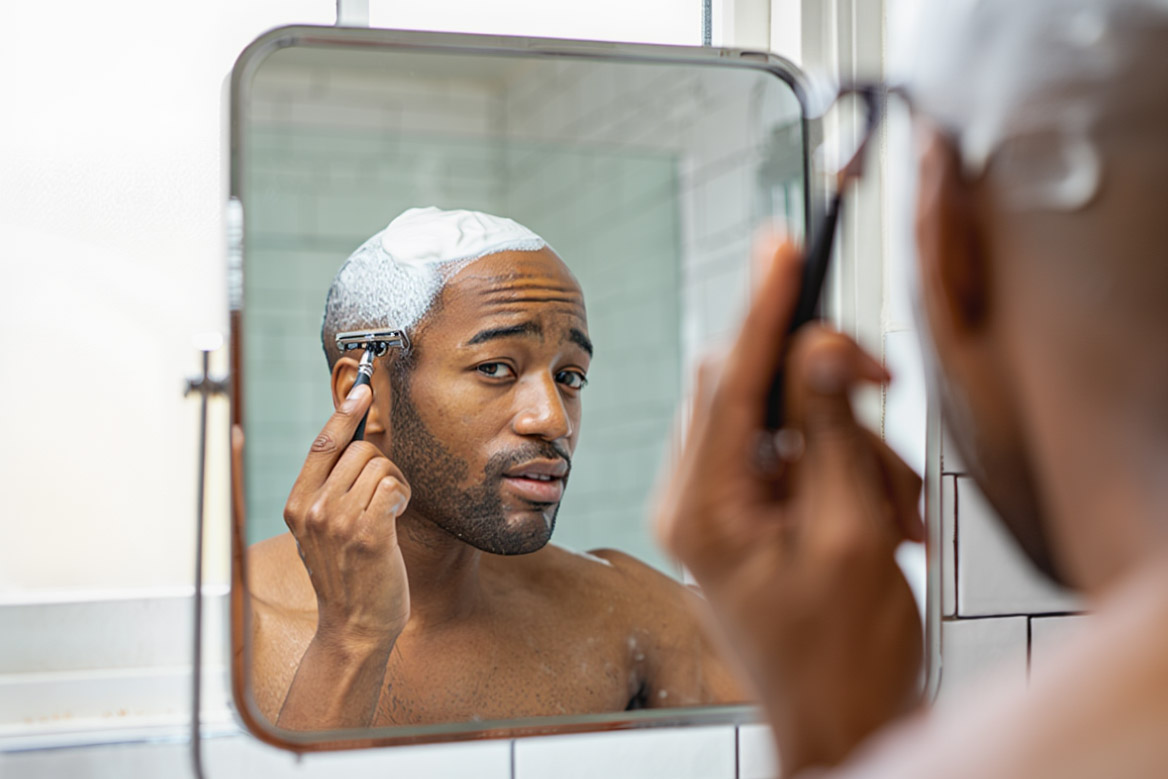
Now it’s time for the main event. Be sure to take your time, as rushing can lead to nicks and uneven results.
Step 1: Start With the Grain
Begin by shaving in the direction your hair naturally grows. This is called shaving “with the grain.” For most people:
- Top of head: front to back
- Sides: downward toward ears
- Back: downward toward neck
Use your free hand to stretch the skin taut as you shave. This creates a flatter surface and helps prevent cuts.
Step 2: Use Gentle, Short Strokes
Don’t apply pressure, let the razor’s weight do the work. Use strokes about 2-3 inches long and be sure to rinse the blade after every few passes. Long strokes increase the chance of cuts on the curved surface of your scalp.
Step 3: Navigate the Contours
Your head isn’t a perfect sphere. As such, you need to pay special attention to:
- The crown: Where hair often grows in multiple directions
- Behind the ears: Easy to miss and tricky to reach
- The occipital bone: The bump at the back of your skull
- Temples: Use extra caution around this sensitive area
Step 4: Reapply Gel and Go Against the Grain (Optional)
For an even closer shave, reapply shaving gel and carefully shave against the grain. This isn’t necessary for everyone and can increase irritation risk, so skip it if your skin is sensitive.
Step 5: Rinse and Inspect
Rinse your head with cool water to close pores. Use your hands to feel for any missed spots—they’ll feel rough or stubbly. Use your mirrors to check visually, especially the back of your head.
Common Mistakes to Avoid
- Using dull blades: Replace cartridges every 5-7 shaves or when you feel pulling
- Shaving dry: Always use gel or cream
- Applying too much pressure: Let the blade do the work
- Skipping preparation: Cold, dry shaving leads to irritation
- Forgetting to moisturize: Aftercare is essential
- Going too fast: Take your time, especially when learning
Aftercare: Protecting Your Scalp
Your newly exposed scalp needs special care to stay healthy and look its best.
Immediately After Shaving
- Rinse with cool water to close pores and remove residue
- Pat dry gently—don’t rub vigorously
- Apply aftershave balm or moisturizer with soothing ingredients like aloe, witch hazel, or tea tree oil
- Avoid alcohol-based products initially as they can sting and dry out skin
Daily Scalp Care
- Moisturize daily: Your scalp loses moisture faster without hair protection
- Use SPF: This is critical—apply sunscreen (SPF 30+) whenever you’ll be outdoors
- Wash regularly: Use a gentle cleanser to prevent oil buildup and clogged pores
- Exfoliate 2-3 times weekly: Prevents ingrown hairs and removes dead skin cells
Sun Protection is Non-Negotiable
A freshly shaved scalp has no UV protection. Without proper sun care, you risk:
- Painful sunburn
- Premature aging and wrinkles
- Increased skin cancer risk
- Uneven pigmentation
Wear a hat, apply broad-spectrum sunscreen, or both when spending time outdoors. Trust me, I’ve made the mistake of skipping this step in the past, and the resulting sunburn was brutal!
Maintaining Your Shaved Head

How Often Should You Shave?
This depends on personal preference and how fast your hair grows:
- Daily: For the smoothest possible look
- Every 2-3 days: Most common schedule, balances smoothness with convenience
- Weekly: Acceptable if you don’t mind some stubble
Making It a Routine
The more you shave your head, the easier and faster it becomes. Most experienced head-shavers can complete the process in 5-10 minutes. Tips for efficiency:
- Keep supplies organized and accessible
- Shave at the same time each day (many prefer morning showers)
- Use a good mirror setup so you’re not contorting to see
- Consider keeping a backup razor to avoid running out of blades
Troubleshooting Common Issues
Razor Burn
Symptoms: Redness, burning sensation, small bumps
Solutions:
- Use sharper blades
- Apply less pressure
- Improve your pre-shave preparation
- Try shaving with the grain only
- Use a soothing aftershave balm with aloe
Ingrown Hairs
Symptoms: Small, painful bumps where hairs grow back into skin
Solutions:
- Exfoliate regularly (2-3 times per week)
- Don’t shave too closely against the grain
- Use proper shaving technique
- Keep skin moisturized
- Consider switching razor types
Nicks and Cuts
Prevention:
- Use fresh blades
- Don’t apply pressure
- Stretch skin taut while shaving
- Take your time around bony areas
Treatment:
- Apply pressure with a clean tissue
- Use a styptic pencil or alum block
- Apply antibiotic ointment if needed
Uneven or Patchy Results
Solutions:
- Improve your lighting
- Use mirrors to check all angles
- Feel with your hands for missed spots
- Go slower and more methodically
- Map your hair growth patterns
Complete Grooming: Beyond the Head
A shaved head looks best when your overall grooming is on point:
Facial Hair Options
- Clean-shaven: Classic, professional look
- Goatee or beard: Adds definition and balances the smooth scalp
- Stubble: Casual, masculine appearance
Whatever you choose, keep it well-maintained and intentional.
Body Grooming
Consider tidying up:
- Ear and nose hair (becomes more noticeable without head hair)
- Eyebrows (keep them groomed but natural)
- Neck and shoulders (if you have significant hair growth)
A cohesive grooming routine ensures your shaved head looks deliberate and polished.
Frequently Asked Questions
Will shaving my head make my hair grow back thicker?
No, this is a myth. Shaving doesn’t affect hair follicles or growth patterns. Hair may feel coarser when it first grows back because you’re feeling the blunt edge rather than the naturally tapered end.
Is it normal for my scalp to be sensitive at first?
Yes, especially if your scalp hasn’t been regularly exposed. It will toughen up over the first few weeks. Use gentle products and protect from sun exposure during this adjustment period.
Can I use the same razor for my head and face?
While possible, it’s better to use separate razors for hygiene and blade longevity. The scalp has more surface area and may dull blades faster.
What if I have moles or bumps on my scalp?
Exercise extra caution around these areas. Stretch the skin to flatten the area when possible, or simply shave around them. If you nick a mole, apply pressure and consult a dermatologist if it doesn’t heal normally.
How do I deal with an oddly-shaped head?
Most people are more critical of their head shape than others will be. That said, maintaining good posture, staying fit, and keeping your scalp well-groomed draws attention to your confidence rather than any perceived imperfections.
Final Thoughts
Shaving your head is more than a grooming task—it’s a bold style choice that requires some skill but offers significant rewards. With the right preparation, quality tools, proper technique, and consistent aftercare, you can achieve and maintain a smooth, healthy-looking scalp.
Start slowly, be patient with yourself as you learn the contours of your head, and don’t cut corners on sun protection and moisturizing. Within a few weeks, what seems daunting now will become a quick, confident part of your routine.
The key is approaching it as a regular practice rather than an occasional event. Stay consistent, invest in quality products, and embrace the look with confidence.
Have questions or tips to share about head shaving? Leave a comment below and join the conversation!
Remember: Everyone’s scalp is different. If you experience persistent irritation, unusual bumps, or other concerns, consult with a dermatologist for personalized advice.












TSA PreCheck Touchless ID Makes Getting Through Security A Breeze

Prime Video Is Getting A Major Shake-Up, Here’s What You Need To Know

Temptation Island Season 2 Is Coming To Netflix And It Looks Absolutely Wild

Bumble’s New AI Assistant ‘Bee’ Wants To Be Your Personal Matchmaker

2026 Shelby F-250 Super Baja Is A Street-Legal Desert Runner

The Mandalorian and Grogu Trailer Is Here, And It Looks So Good!

Southwest Airlines Facing Backlash After Getting Rid Of Open Seating

2027 Audi RS5 PHEV Is What Happens When Engineers Have No Limits

Apple Is Building Three AI Wearables, And Development Is Speeding Up

Krispy Kreme and OREO Team Up For New Limited-Edition Doughnut Drop

Watch The Fast And Furious Trailer For ‘Hobbs & Shaw’

A Dance-Off For The Ages Broke Out At Monday Night’s 76ers Game

Netflix Drops ‘Black Mirror: Bandersnatch’ Trailer Ahead Of Release Tomorrow

Former NASA Engineer Gets Revenge On Package Thief With Glitter Bomb

Recent Comments