
Cars
2027 Audi RS5 PHEV Is What Happens When Engineers Have No Limits

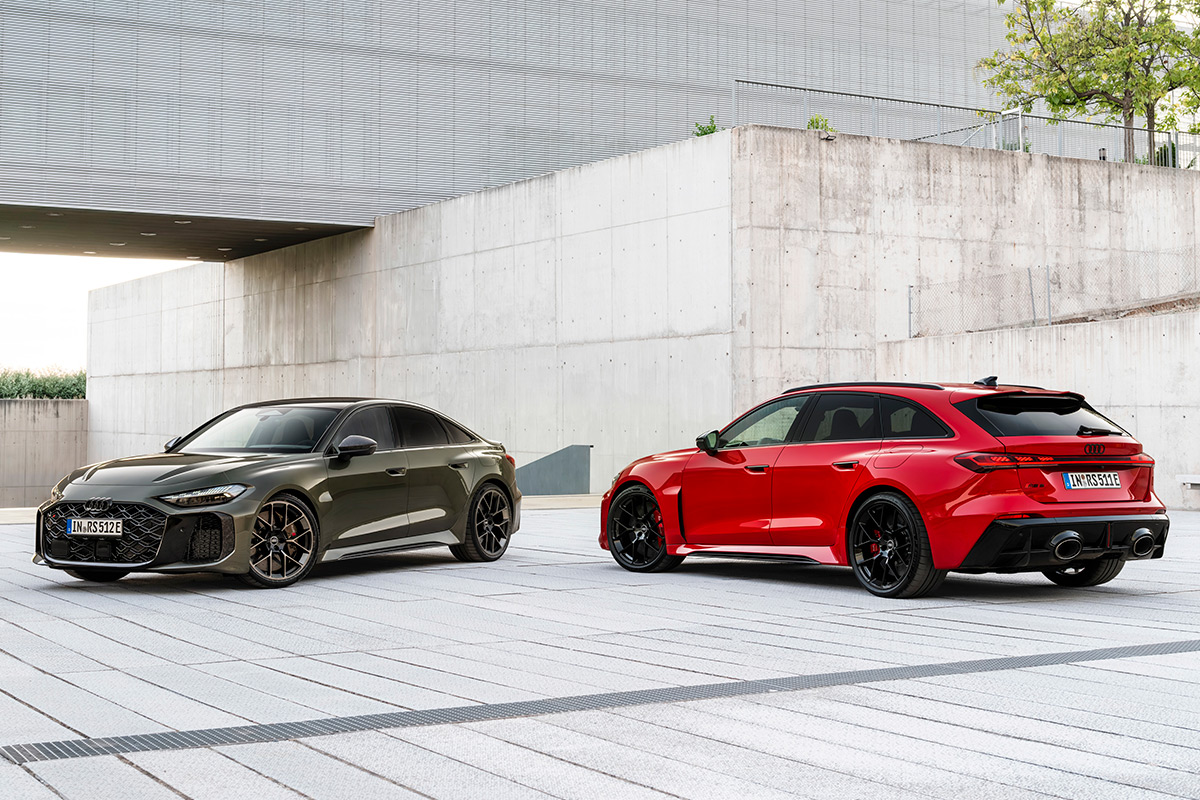
Audi just announced something that sounds like it shouldn’t work on paper.. but absolutely does in practice. The all-new 2027 RS5 is Audi Sport’s first-ever high-performance plug-in hybrid, and it’s not some watered-down, eco-friendly compromise. This beast puts out 630 horsepower, does 0-60 in 3.6 seconds, and packs a world-first drivetrain technology that’s never been seen in a production car before.
If you thought “hybrid” and “performance” couldn’t share the same sentence without an asterisk, the new Audi RS5 is here to change your mind.
639 Horsepower from a Twin-Turbo V6 and Electric Motor
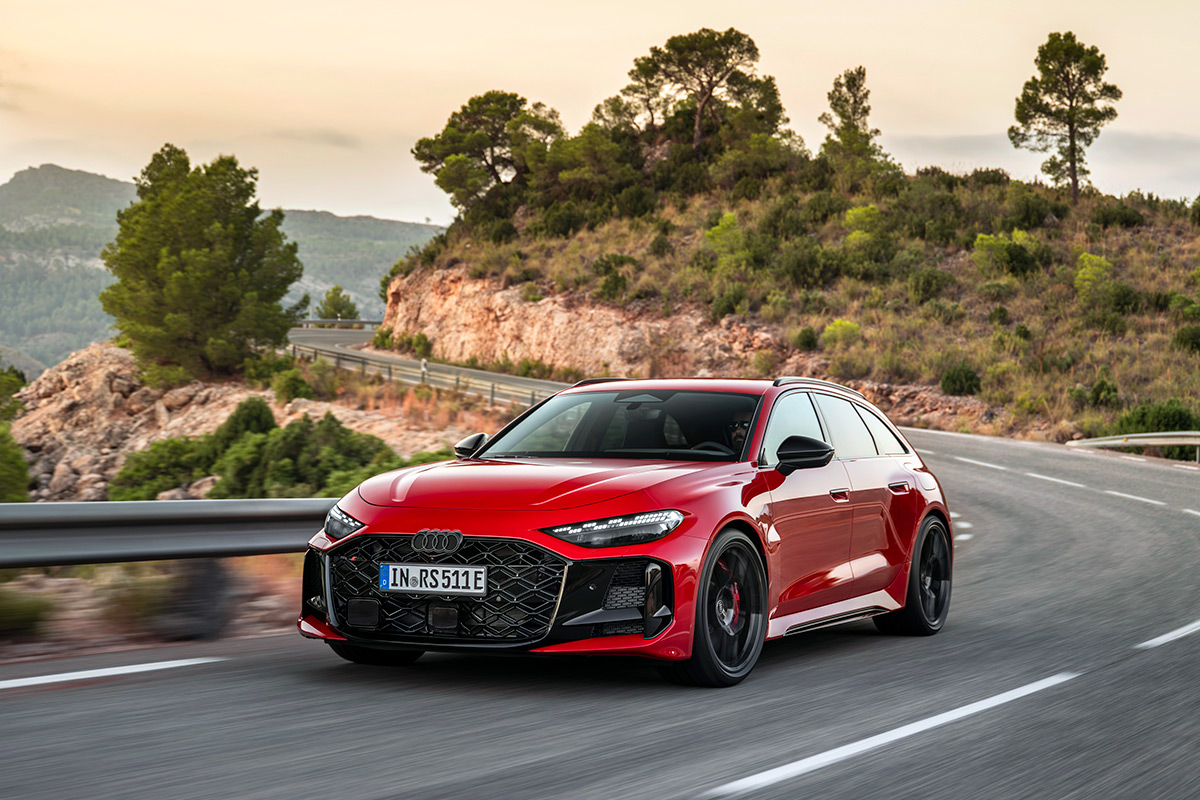
The powertrain is where this story really gets interesting. Audi paired an improved 2.9-liter twin-turbo V6 (now cranking out 503 horsepower and 443 lb-ft of torque on its own) with a 130-kilowatt electric motor integrated into the gearbox. Together, they produce a combined system output of 630 horsepower and 609 lb-ft of torque.
For 2027, the V6 engine alone sees an increase of 66 horsepower over the previous generation, thanks to a modified Miller cycle, water-to-air intercoolers (a first for the RS5), and higher fuel injection pressure. Audi claims it uses up to 20% less fuel under high loads than before. The electric motor handles throttle response off the line and also doubles as the engine starter, meaning there’s no traditional 12-volt starter motor needed.
Audi states the RS5 will rocket from 0-62mph in 3.6s, which is supercar territory for a car you can drive comfortably to work every day.
World’s First Electromechanical Torque Vectoring System
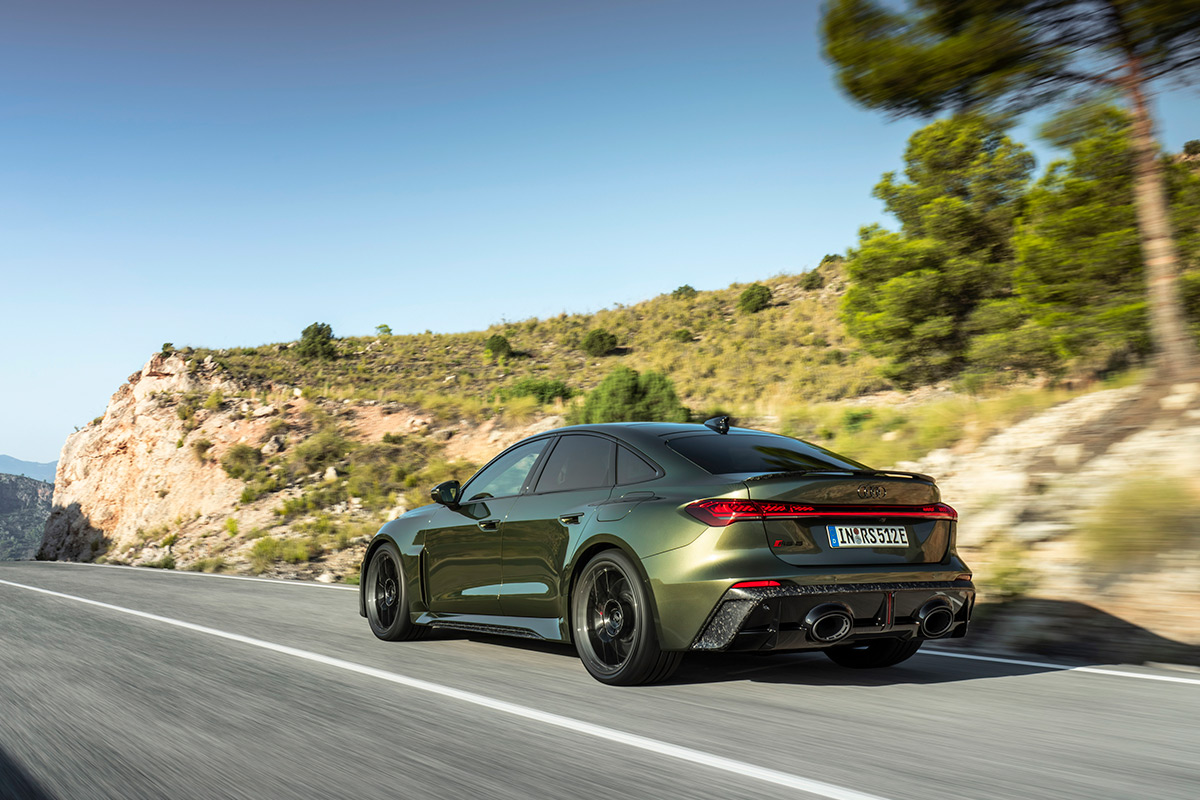
This is the headline tech, and it’s genuinely groundbreaking. Audi is calling it “quattro with Dynamic Torque Control,” and it marks the first time any production car has featured electromechanical torque vectoring in a rear transaxle.
Here’s what that means in plain terms: a dedicated 8-kilowatt electric motor in the rear can shift up to 2,000 Nm of torque difference between the left and right rear wheels in just 15 milliseconds. The system recalculates optimal torque distribution every 5ms (200 times per second), reacting to steering angle, throttle position, brake pressure, yaw rate, and even the estimated grip level of the road surface.
The result is a car that can actively push itself through corners, maintain stability during sudden lane changes, and even execute controlled drifts in the right mode.
“Our newly developed quattro drivetrain with Dynamic Torque Control is the world’s first electro mechanical torque vectoring system in a production car. The sophisticated technical interplay between combustion engine and electric power brings performance and efficiency together in a new way at Audi. Customers can experience both peak sportiness and every-day comfort,” says Audi CEO Gernot Döllner. Rolf Michl, Managing Director of Audi Sport.
A New Drift Mode? Yes, Really.
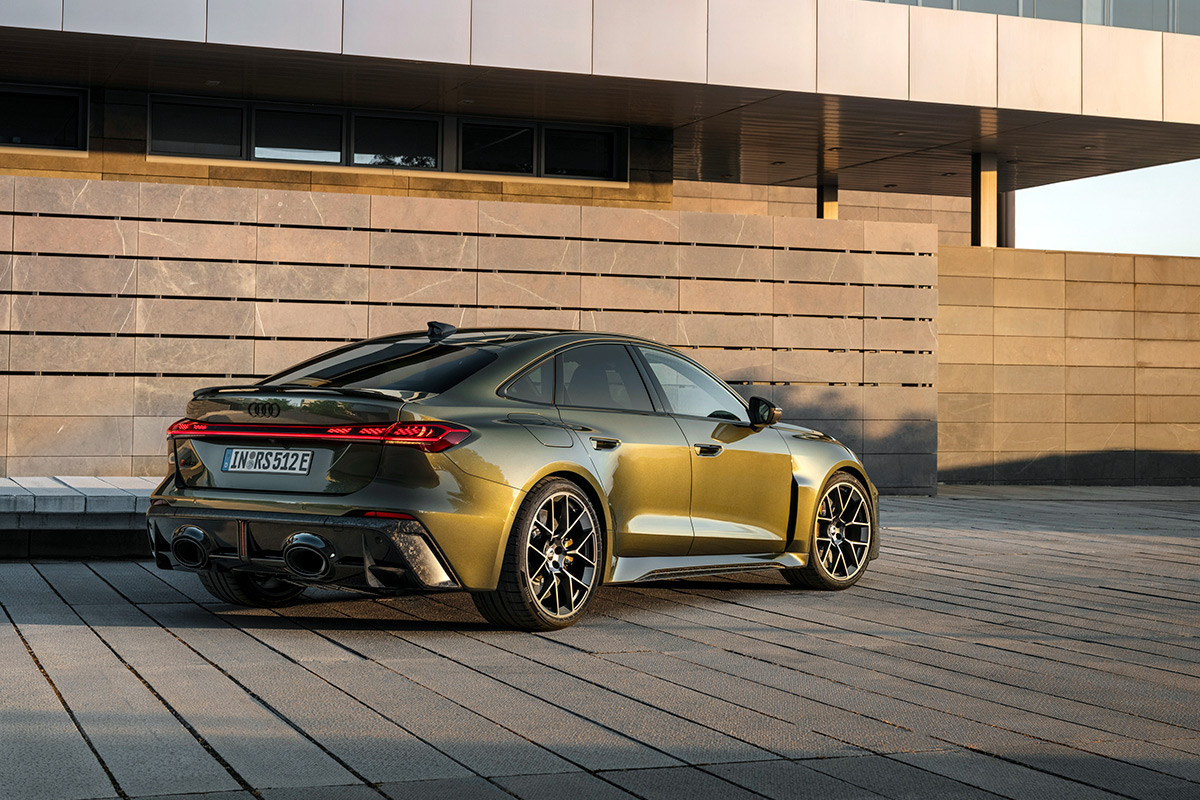
The RS5 introduces a drive mode called “RS Torque Rear,” and it’s exactly what it sounds like. In this mode, the car aggressively biases torque to the outside rear wheel, making the RS5 feel “extremely agile and playful” while maintaining full control. Audi’s own driving experience system can even log your drift angle data for later analysis.
There’s also a Boost function that deploys maximum power for 10 seconds at the press of a button (great for overtakes), complete with a countdown timer in the driver display and the V6 firing up instantly if you’re running in electric-only mode.
Other drive modes include Comfort, Balanced, Dynamic, RS Sport, and RS Individual, covering everything from quiet electric commuting to track-focused attack mode.
Over 50 Miles of Electric-Only Range
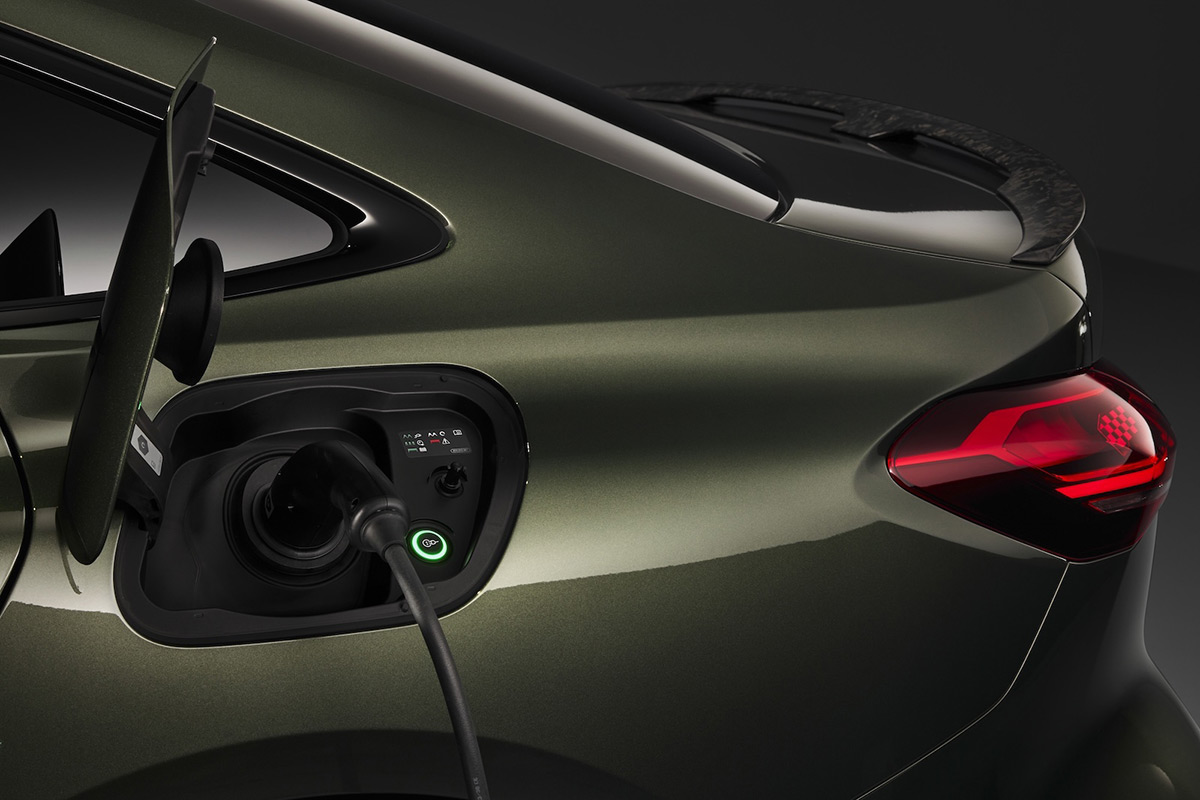
On a full charge, the RS5’s 25.9-kWh battery (with 22 kWh usable) delivers up to 54 miles of all-electric driving range in the city. The car charges at up to 11 kW AC, reaching a full charge in about 2.5 hours.
The smart battery management system keeps charge levels high when you’re in RS Sport or RS Torque Rear modes, never dropping below 90%, so the electric motor always has full power available for torque vectoring and performance bursts.
“The RS5 and its innovative drive concept mark the beginning of a new era for our RS models. They bring a new level of dynamics to the driving characteristics our customers love and further improve day-to-day use value thanks to all-electric driving and innovative technologies. A new interpretation of the true RS experience,” says Rolf Michl, Managing Director of Audi Sport.
The only downside to the plug-in hybrid setup is the increased weight, as the new RS5 is one seriously chonky girl, weighing in at 5,192 pounds! That’s significantly heavier than its predecessor, which weighed 3,825 pounds. But despite the extra weight, it maintains the same power-to-weight ratio as the old car.
A Chassis Built for the Track, Tuned for the Street
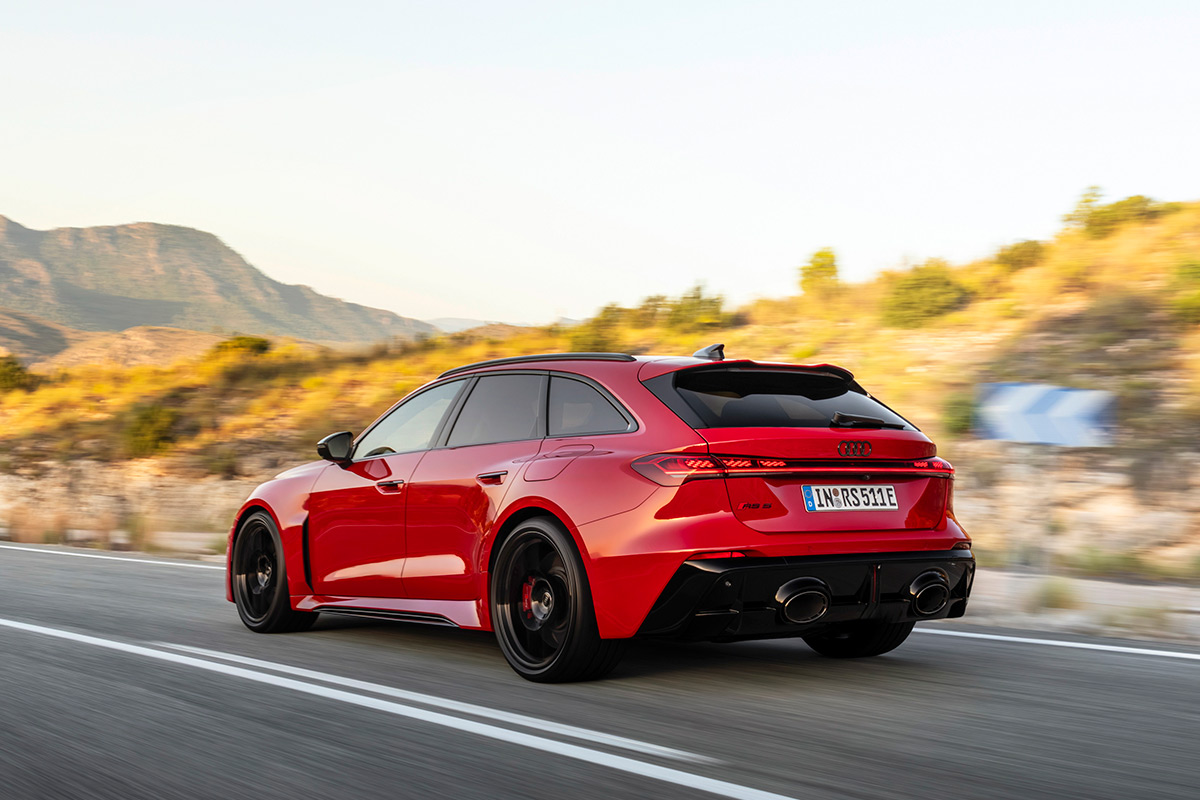
The suspension got a complete overhaul to match the powertrain’s capabilities. The RS5 runs five-link suspension front and rear, with a newly developed rear axle built from scratch to handle the demands of the torque vectoring system. The unibody is 10% stiffer than the A5.
The standout feature is the new twin-valve shock absorbers — a design that lets compression and rebound be controlled independently, reducing pitch and roll while still delivering a comfortable daily ride. Audi even tested these dampers on a special hydro pulse facility that simulates conditions beyond anything you’d encounter on public roads.
Steering ratio is a quick 13:1, forged 21-inch wheels are standard, and braking is handled by massive steel rotors (420mm front, 400mm rear) or an optional ceramic setup (440mm front, 410mm rear) that stops the car from 62mph in just 100 feet.
Wider, Meaner, and Unmistakably RS
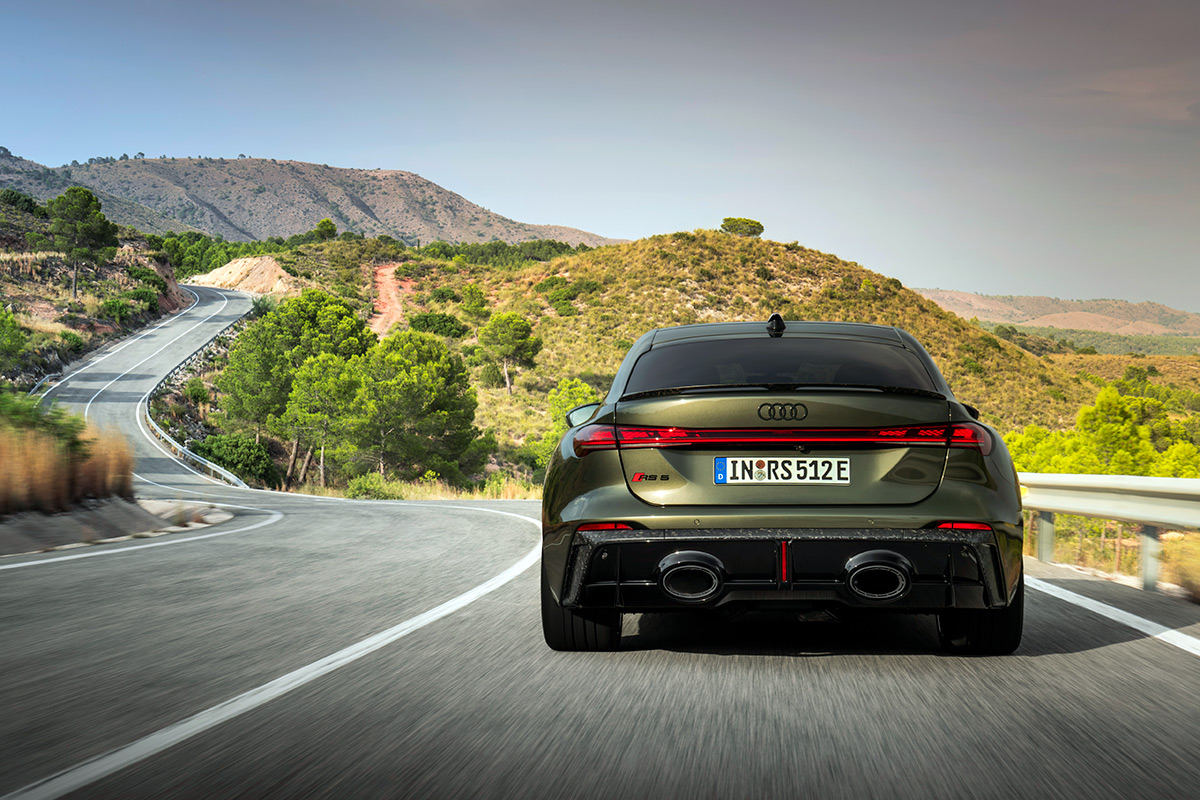
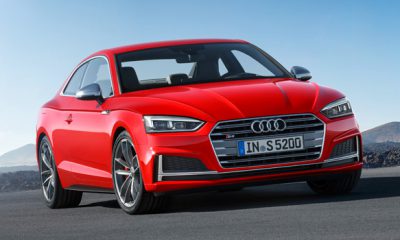
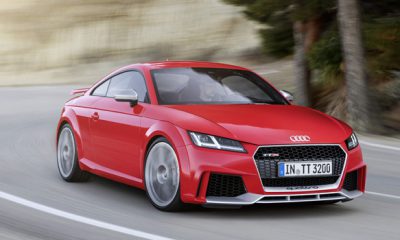
Visually, the RS5 is 3.5 inches wider on each side compared to the standard A5, with flared fenders that give it an aggressive, planted stance. The front fascia features a 3D honeycomb Singleframe grille, functional air curtains, and darkened Matrix LED headlights with a checkered-flag daytime running light signature.
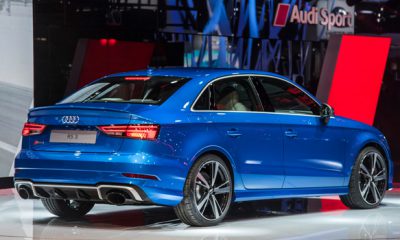
Out back, there’s a sculpted diffuser with vertical fins, a central red motorsport-nod reflector, and the RS sport exhaust system’s matte oval tailpipes sitting center stage. The exhaust valves can open to any position, tuning the sound to match your selected drive mode.
An optional Audi Sport package adds even more aggressive bumpers, exclusive Bedford green metallic paint, bronze-colored ceramic brake calipers, carbon camouflage elements, and raises the top speed to 177 mph.
Inside: Driver-Focused and Tech-Loaded
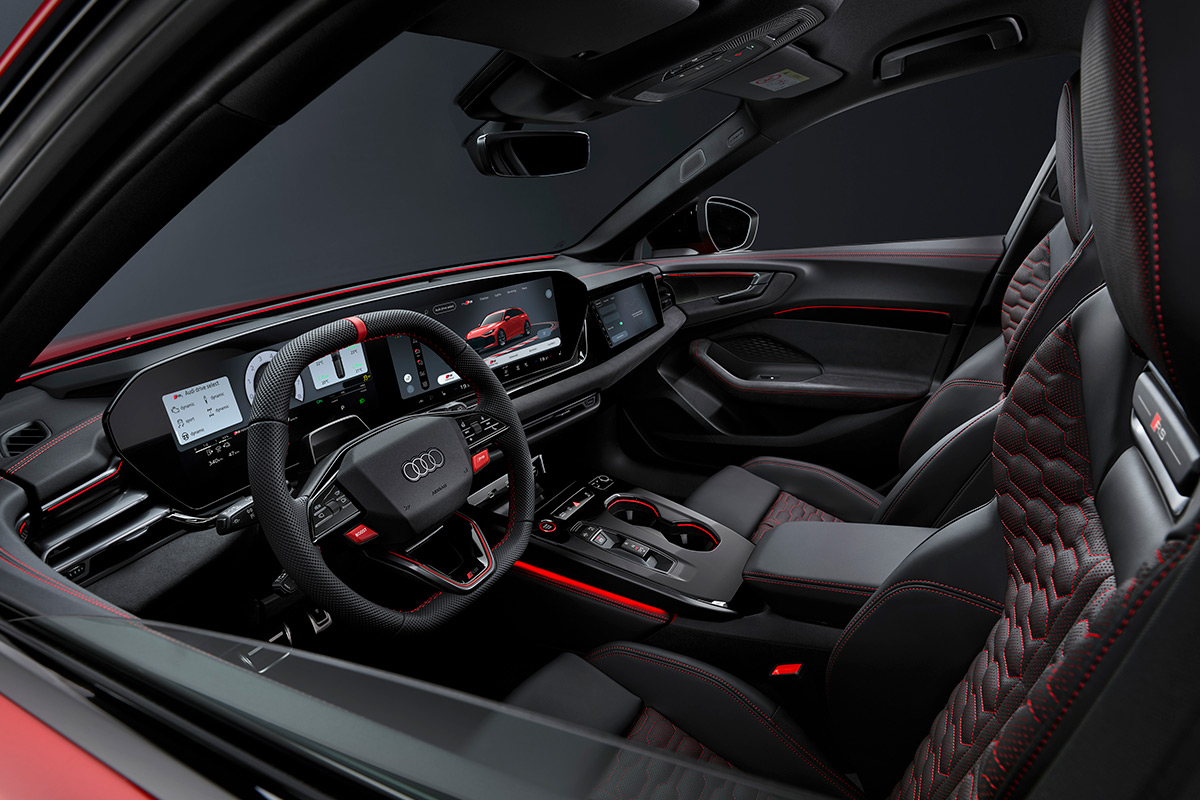
The cockpit is built around a curved panoramic OLED display setup combining an 11.9-inch virtual cockpit and a 14.5-inch MMI touchscreen. A 10.9-inch passenger display is standard. The head-up display can project a rev counter onto the windshield and even guide you through launch control.
Five interior designs are available, including leather-free options using recycled materials and genuine leather choices in red or gray. The flat-bottom RS steering wheel features integrated RS satellite controls for direct access to drive modes and the boost function.
Price and Availability
In Germany, pricing for the new Audi RS5 Sedan starts at around $125,000 and the RS5 Avant starts at $127,000. U.S. pricing, performance specs, and EPA figures haven’t been announced yet, but Audi says those details will come closer to the American on-sale date.
A few features, like the matrix LED communication lights, won’t be available in the U.S. due to regulations, and it’s questionable if we’ll get the Avant model either, as Americans don’t really care for wagons (even though the Mercedes-AMG E63 S we drove was an absolute hoot).
The RS5 is built in Neckarsulm, Germany, and represents what Audi is calling the beginning of a new era for its performance lineup. If this is where hybrid performance is headed, consider us fully on board.
What do you think of the all-new 2027 Audi RS5?









2027 Audi RS5 PHEV Is What Happens When Engineers Have No Limits

Apple Is Building Three AI Wearables, And Development Is Speeding Up

Pininfarina and Argos Nautic Reinvent The Yacht Tender With Sleek F-330

Lynx’s 2027 Snowmobile Lineup Is Here, And It Doesn’t Disappoint

Netflix’s ‘War Machine’ Turns Army Ranger Training Into Fight For Survival

Google Introduces New Low-Cost AI Plan, Takes Direct Shot At OpenAI

2027 Mercedes-Benz S-Class: The Ultimate Status Symbol Just Got Smarter

Krispy Kreme’s Chocomania Collection Is Back For A Limited Time

Amazon’s Alexa+ AI Assistant Is Now Free For Prime Members

Red Robin’s Big YUMMM Deals Just Made Eating Out Affordable Again

Watch The Fast And Furious Trailer For ‘Hobbs & Shaw’

A Dance-Off For The Ages Broke Out At Monday Night’s 76ers Game

Netflix Drops ‘Black Mirror: Bandersnatch’ Trailer Ahead Of Release Tomorrow

Former NASA Engineer Gets Revenge On Package Thief With Glitter Bomb

Recent Comments