
Cars
Polestar’s Formula 2030 Concept Is A Low, Mean Look At The Electric Future

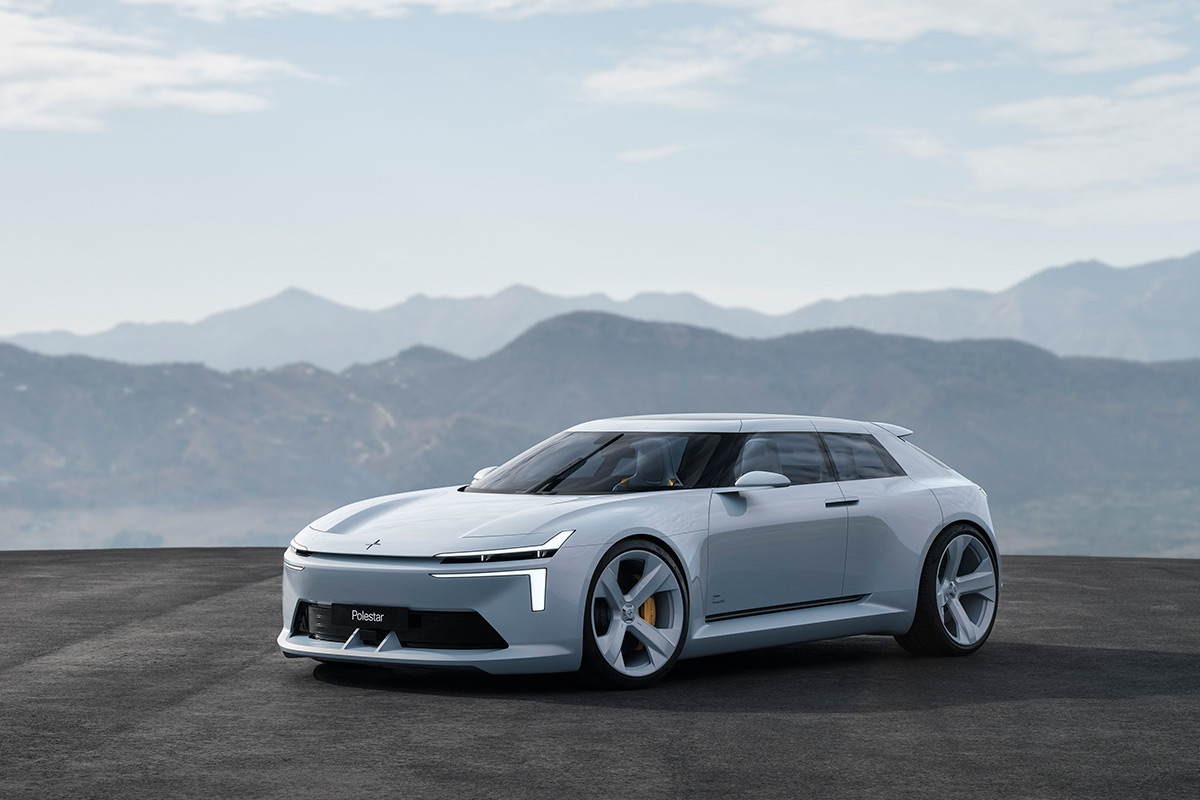
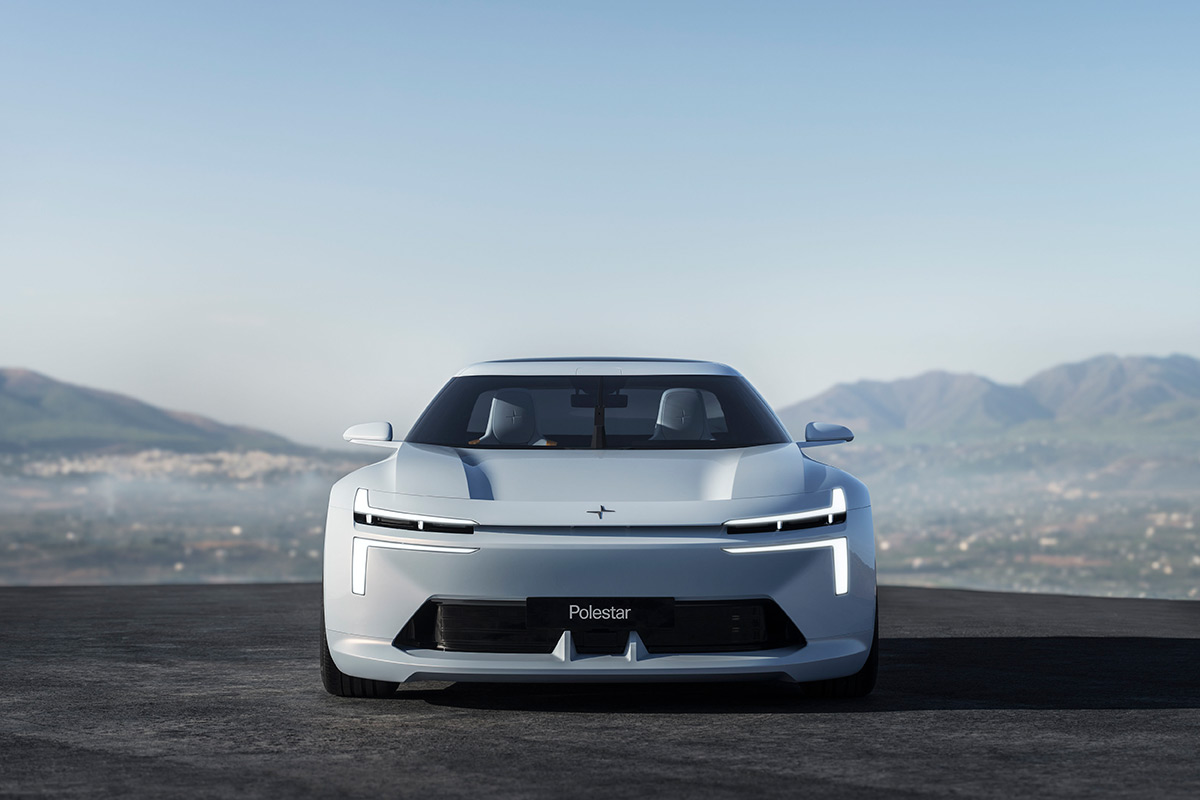
Polestar, the Swedish electric performance brand, just pulled the wraps off the Formula 2030 concept. It debuted at a media drive event for the Polestar 4, and while this exact car isn’t headed for production, it’s the physical version of the brand’s wider Formula 2030 strategy. In other words, it tells us what future Polestars will look like, feel like and ask of the driver. In a word.. DAMN!
It’s also the first show car built under Head of Design Philipp Römers. The brief stuck to the original Polestar formula: remove the unnecessary, improve what remains and refuse to compromise.
Römers explains what that means in practice: “Design should always reflect the values and mission of a brand and that is exactly what we did with Polestar Formula 2030 concept. It is a physical embodiment of how we apply Polestar‘s core values of design, performance and sustainability to the next production cars. A bold evolution of our already well-established design DNA to strengthen the brand‘s positioning with performance at its heart.”
Small, Low And Built Like It Means It
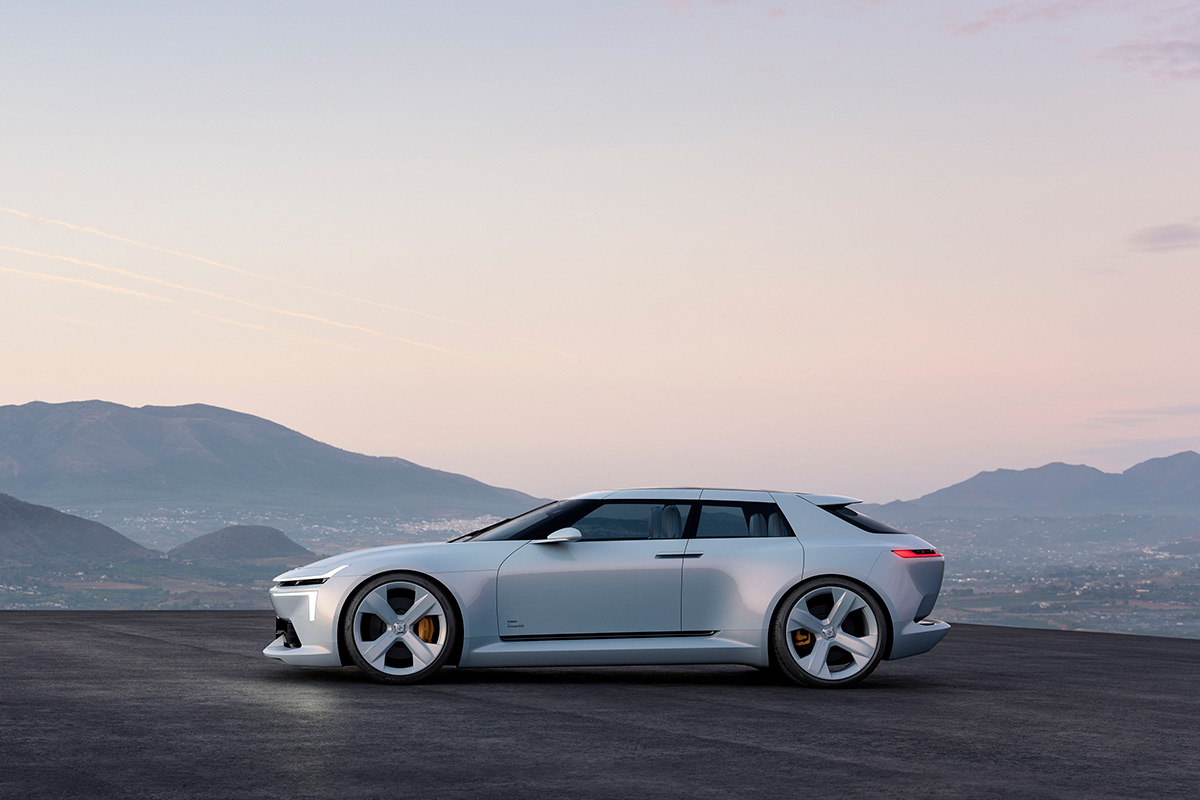
Polestar calls it a compact, practical four-door sports car with a rear hatch, sitting in its own segment. The numbers: about 184 inches long, 79.6 inches wide, with a 109.4-inch wheelbase. The roof stands just 53.1 inches off the ground, which is even lower than the Polestar 5 Grand Tourer. Dimensionally, that slots it between the upcoming Polestar 2 and the Polestar 7, with a bit of low-slung practicality borrowed from the recently launched Polestar 4 SUV.
From the side, the proportions scream performance. There’s a modern take on the classic cab-rearward stance, powerful rear haunches, a long hood, short overhangs and 22-inch wheels. Look from above and you’ll spot the coke-bottle hips and rear-weighted visual power that Polestar fans know well.
The Face & Tail: Dual Blades Up Front, New Look Out Back
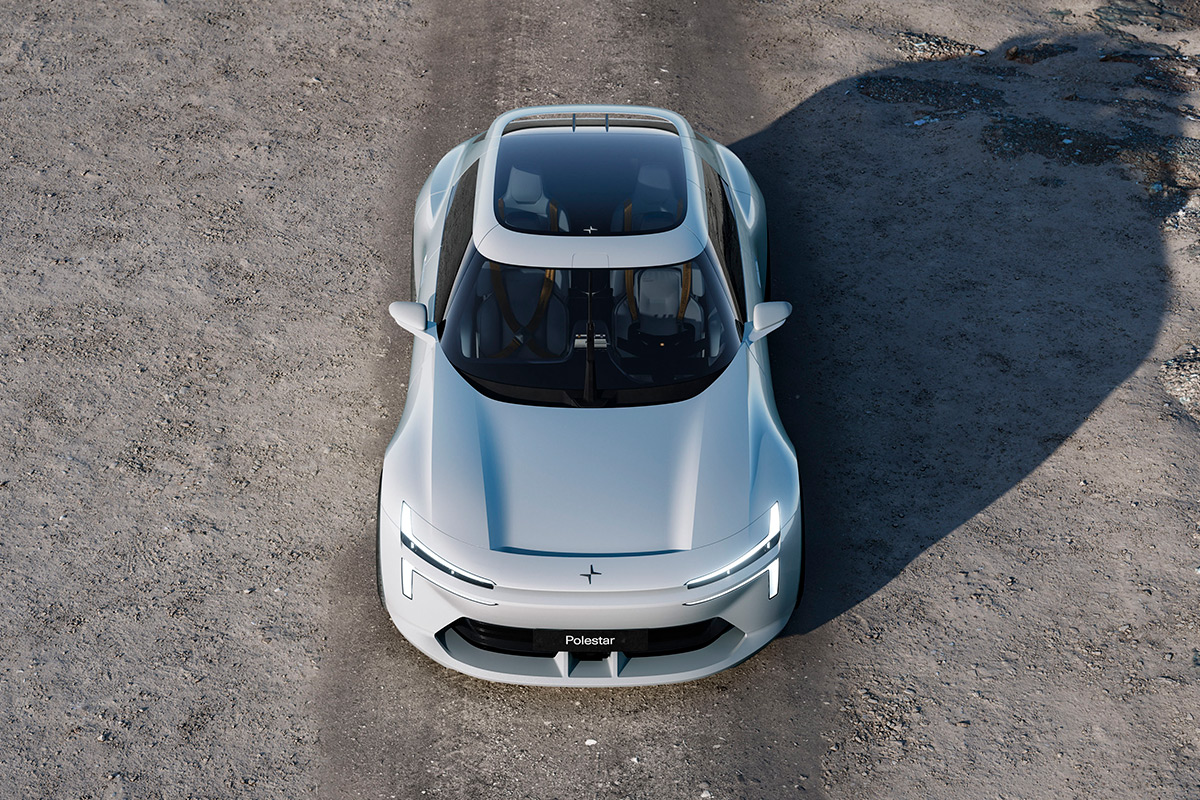
The Dual Blade headlights are the headline up front, and they preview the face of the next-generation Polestar 2. They’re tucked neatly into a front aero wing, a nod to the Polestar 3. A shark nose and a deep front splitter, anchored by a central spine, keep things aggressive.
That spine continues up into a single, vertically oriented windscreen wiper, a motorsport-style touch, mounted on a visor-like wraparound windscreen that honors the first-generation Polestar 2. A LiDAR unit stays hidden under an aerodynamic shroud until the driver uses the car’s autonomous drive capabilities. Then it reveals itself. The Polestar guiding-star symbol is projected into the panoramic glass roof.
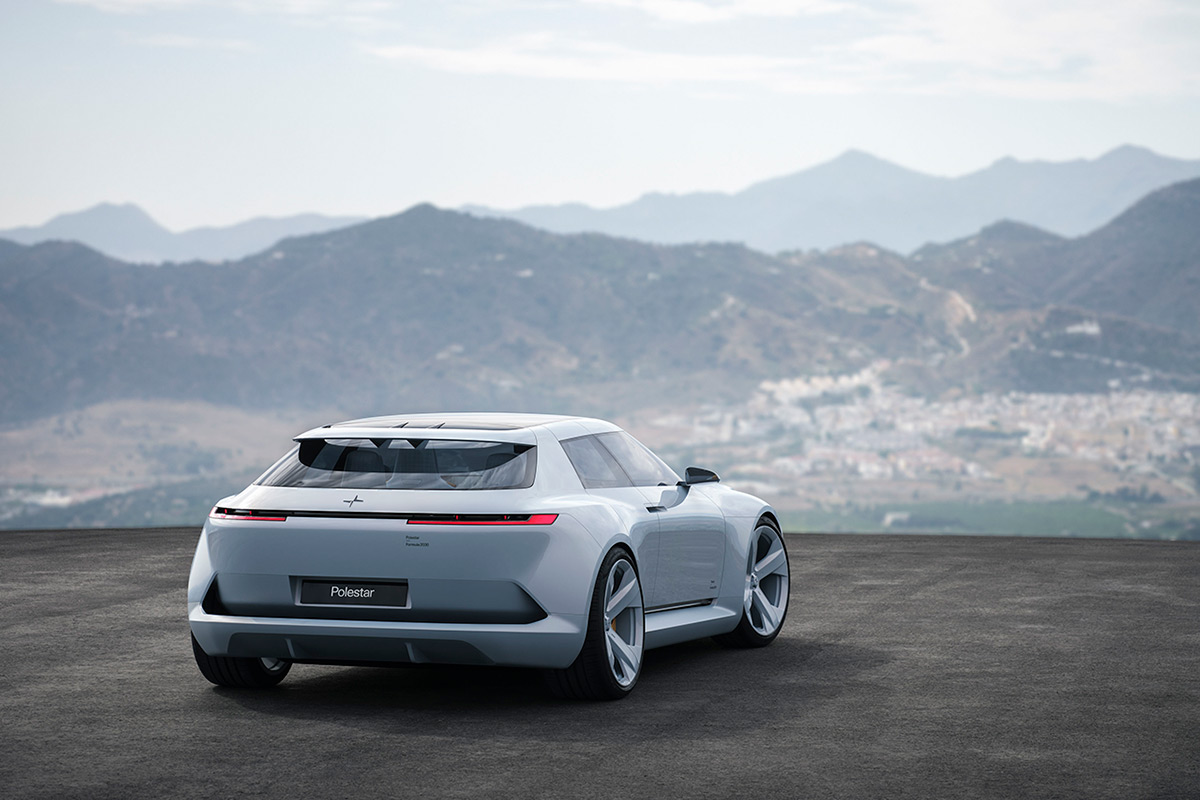
The back end is the real shake-up. Polestar’s “UFO-esque” rear drops the lightbar the brand has used on recent models in favor of the new Single Blade rear lights, planned for series production. Unlike some windowless Polestar rear ends, this one gets a large rear window, and the rear glass wraps into shallow side glazing. A strong C-pillar runs from the haunches into the roof, and the rear wing mounts centrally on lit supports above a lower diffuser built for downforce.
Nahum Escobedo, Head of Exterior Design, wanted to push forward without losing the plot: “We wanted to evolve, while respecting, the core design values we demonstrated with previous models that define the Polestar brand in such a recognizable way. And with Formula 2030, with its clear Polestar design attributes like the Dual Blade headlights, wraparound visor-like windshield and powerful haunches, we have done just that. But we’ve pushed perceptions, preconceptions and the expected as well, with our considered choices in form language, amplification of the performance topic and new detailing like the Single Blade rear lights.”
A Cockpit Built Around The Driver
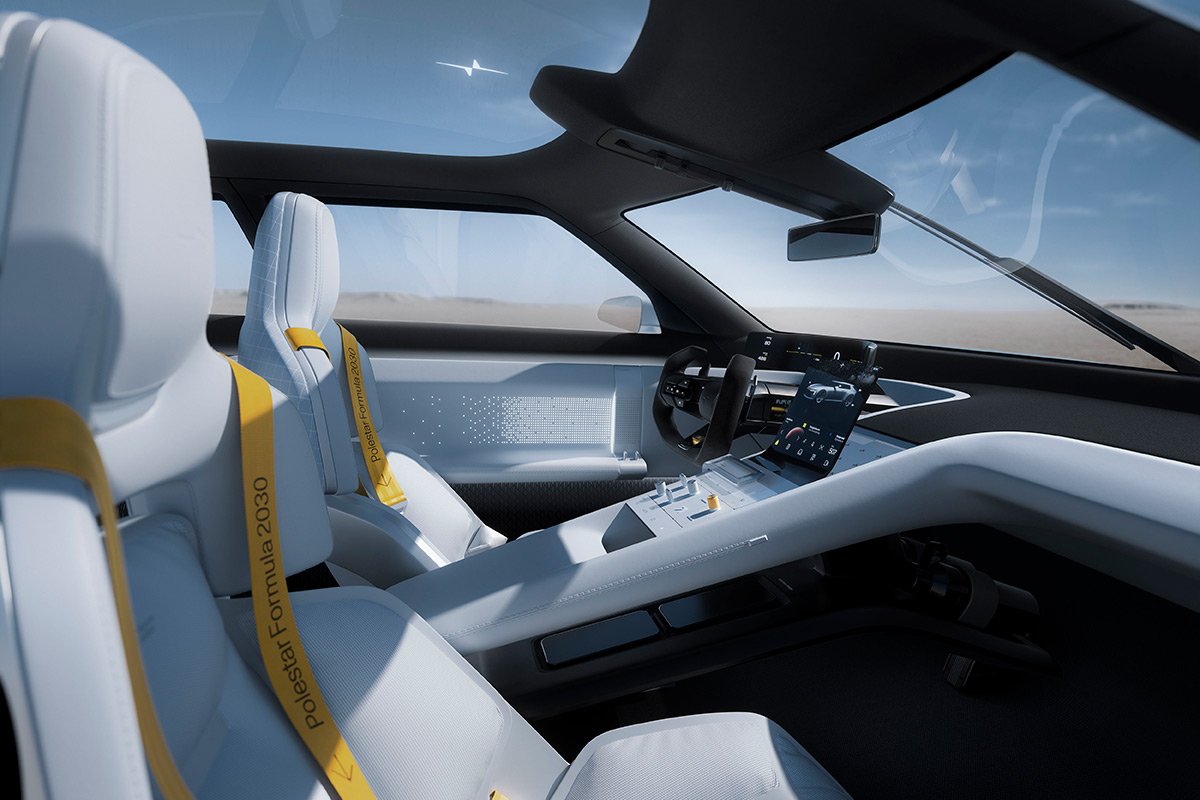
Inside, everything is focused on the person behind the wheel. The centerpiece is a 20-inch HyperDIM, a curved driver information monitor mounted directly to the steering column so it stays in your sightline. A 12.2-inch center screen sits in a gently rising center tunnel, designed to stress the driver’s primary position.
A horizontal interior band wraps around the driver and flows through the cabin in indirect lighting. Polestar says this offers the clearest hint of what future interiors will look like.
There are four individual seats with air-inflatable bolsters and cushions that mold to each occupant. They sit low for a proper performance seating position. Coach-style opposing doors open without a B-pillar, so getting into all four seats is easy.
Three Drive Modes That Physically Reshape The Cabin
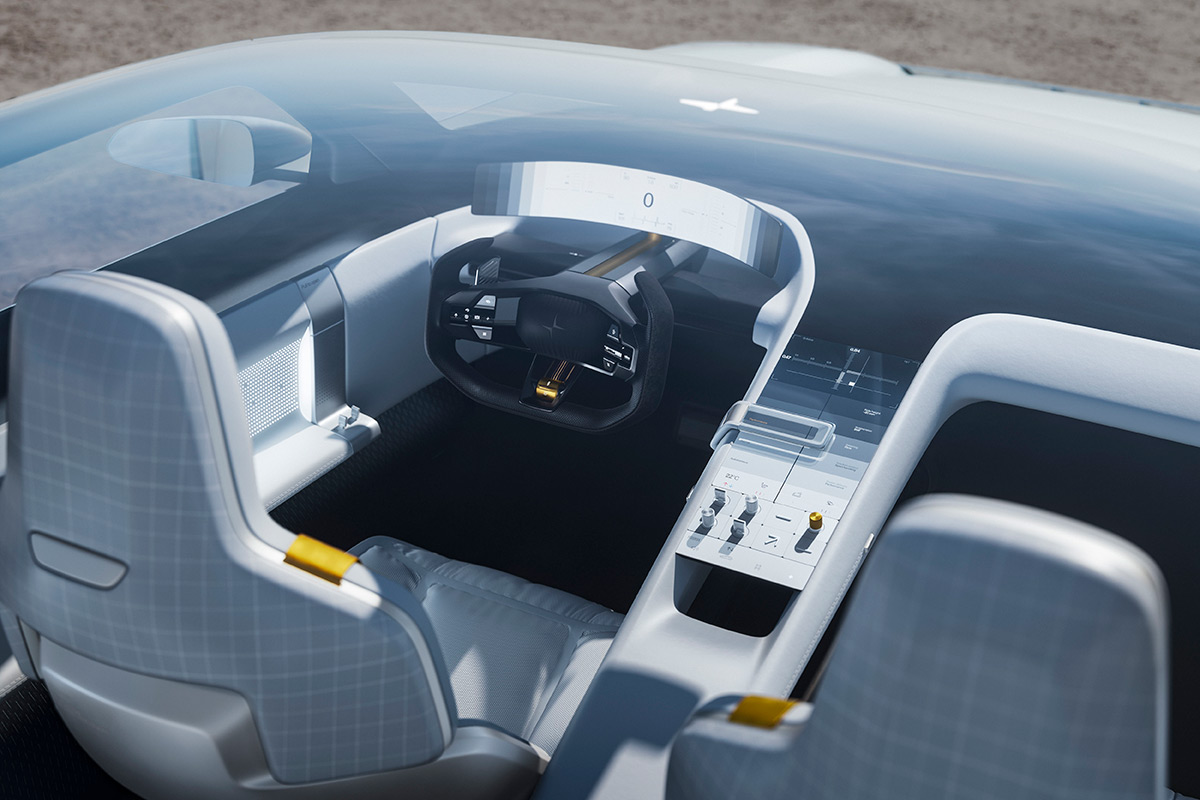
This is the coolest trick in the car. You pick between Performance, Normal and Autonomous by sliding the drive mode selector forward through the plane of the center console, and the cabin physically changes to match.
In Autonomous mode, the center screen stays upright, and the seat and steering wheel move away from each other as the car takes more control. Shift toward Performance and the center screen lowers flush into the surface while the steering wheel and HyperDIM pull closer to your chest so you’re in control.
Real Buttons Are Back
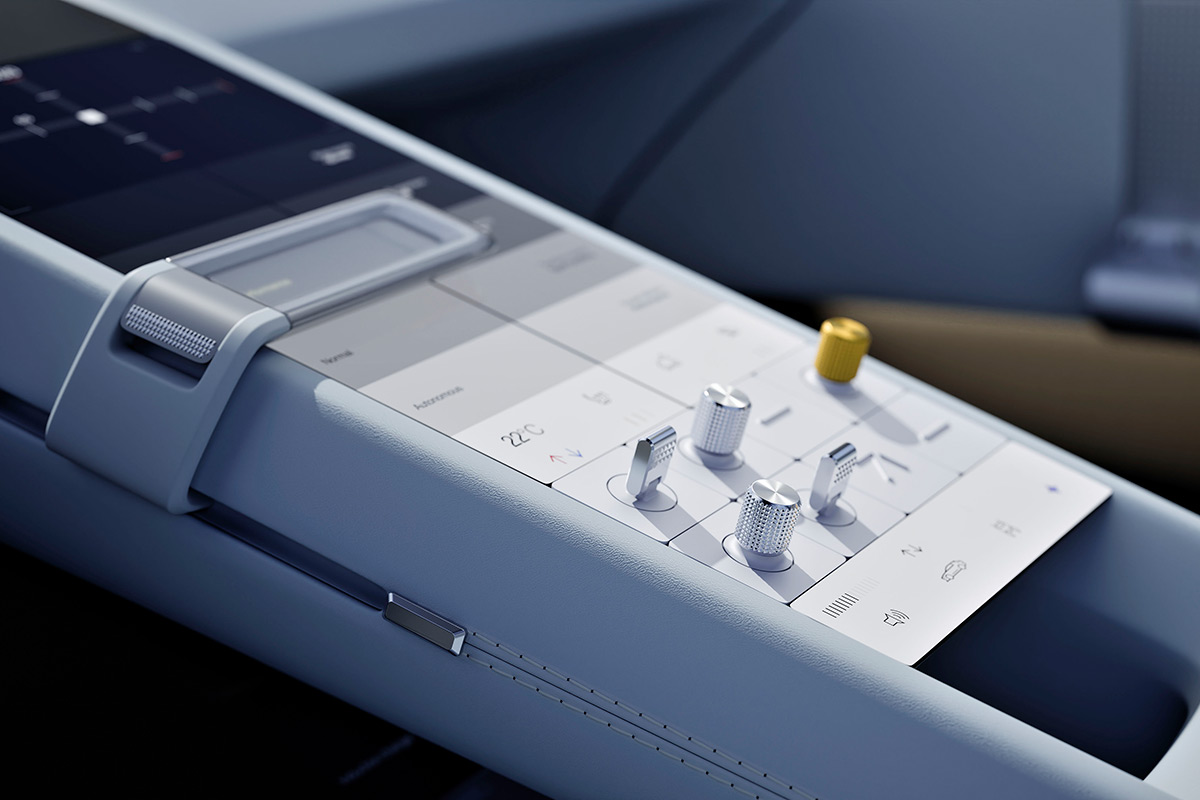
If you are tired of burying simple functions in touchscreen menus, pay attention. Polestar is rebalancing physical and digital with a panel of eight physical controls below the center screen. Owners can choose the type of control, like rocker switches or rotary controllers, and set what each one does. Programmable hot keys handle user-defined functions.
Juan Pablo Bernal, Head of Interior Design, lays out the thinking: “With the Formula 2030 concept we’re reducing the unnecessary, distilling the experience to its very essence and enhancing the elements that truly matter to set the tonality and ambition for future Polestar interiors. As a performance brand, we see a renewed focus on the driver, and so we re-balance the digital and physical. We introduce physical buttons and controls, and we believe we have achieved a tactile harmony suited for our premium positioning.”
On the tech side, Google Gemini is built in, giving everyone on board a conversational AI voice experience.
Nitrogen Paint And Swedish Gold Accents
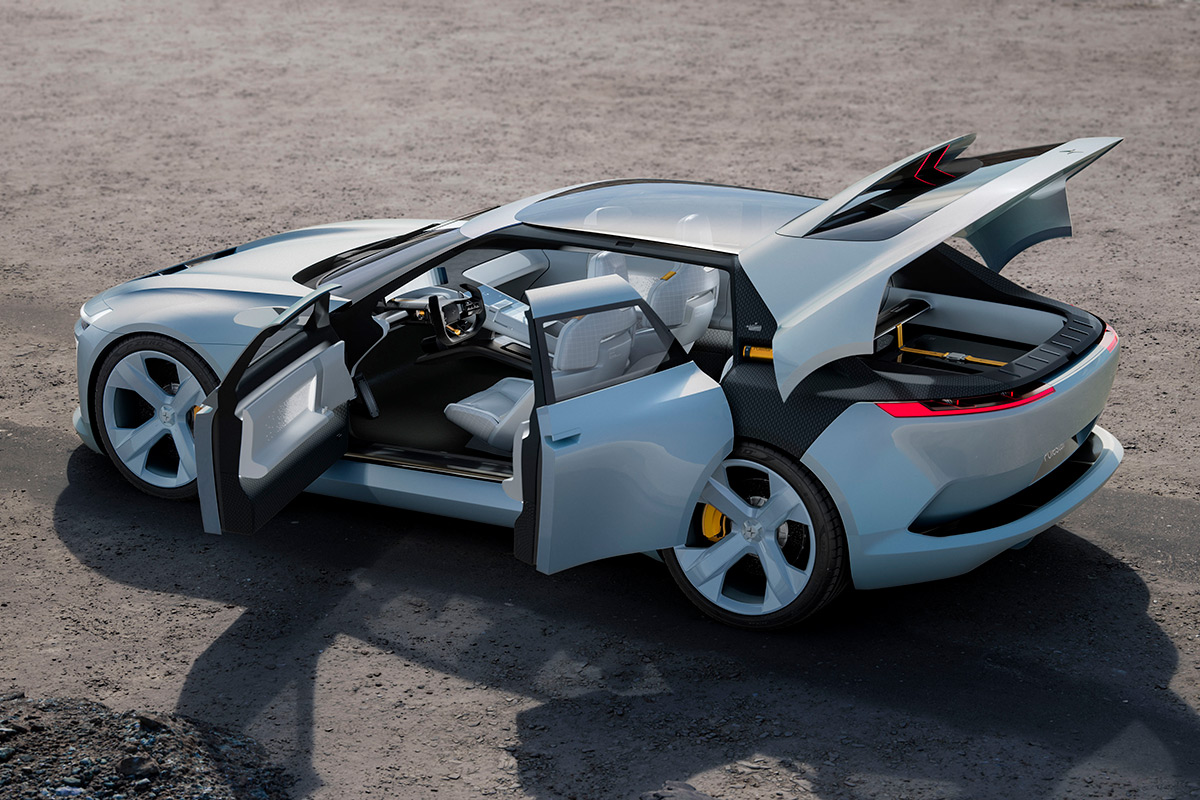
The concept debuts a new exterior color called Nitrogen that is made specifically for this car and designed to react dynamically to natural light. It covers the whole body, plus the 22-inch center-lock wheels, side cladding, front splitter and rear diffuser, in a tone-in-tone Scandinavian look. Gloss, matte and satin finishes let each part stand out.
The pop of contrast is Swedish Gold, Polestar’s Performance signature. You’ll find it on the Brembo brake calipers, valve caps, interior detailing and seat belts.
Maria Uggla, Head of Color Material and Finishes, says: “With the Formula 2030 concept we knew we had to do something that stands out, but we had to do it in a true Polestar way. The resulting tone in tone treatment flows effortlessly between interior and exterior, feeling deeply rooted in our Scandinavian minimalist aesthetic in an unexpected and unseen way. Combined with our drive forward for deeply desirable, highly designed, sustainable materials the Formula 2030 points directly towards our future.”
Sustainable Materials That Still Look Cool
Polestar keeps pushing its sustainability angle. The door interiors are fully recyclable under the brand’s mono-material strategy, and the exposed seat frame and cross-car beam use low-emission galvanized steel made with recycled material and renewable energy. The seat back is a bio-based composite of European flax & bio-based polypropylene in a signature grid weave.
Lift the rear clamshell and you’ll see exposed body structure showing off Bcomp’s natural fiber composite. The trunk floor is transparent, so the race-inspired Öhlins dampers are on full display, and bespoke Polestar bags sit beneath it, secured with Swedish gold straps. Up front, a luggage compartment made for race helmets and a fire extinguisher is framed by a Swedish gold strut brace.
What It Means For The Showroom (And The US Catch)
Polestar has confirmed that design elements from the Formula 2030 concept will show up in the production next-generation Polestar 2, expected in early 2027, and the upcoming Polestar 7, expected in 2028. So while the concept itself won’t be built, a lot of its attitude is headed to real driveways.
Here’s the catch for American readers. As you might have heard, Polestar is currently banned from selling new vehicles in the United States, and it’s unclear if they will be allowed to sell future vehicles in the US or not. So for now, you may have to cross the Atlantic to get behind the wheel of the next-gen Polestar 2 or the 7.
Polestar didn’t release powertrain, power or range figures for the concept, so for now this is all about design and direction. But if the Formula 2030 is any hint, the next wave of Polestars will be lower, sharper and a lot more driver-focused.



Humolux Bamboo Boxer Briefs Review: The Soft, No-Roll Pair Your Drawer Needs

Gordon Ramsay Is The New Top Gear Host, And We’re Still Processing It

Ridgeline Summit Review: American-Assembled Adventure Watch Built To Last

2028 Ford Mustang GTD 1901 Wears Henry Ford’s Winning Colors

Acura Brings Back Yellow: 2027 Integra Type S Heritage Edition Honors A Legend

Is Primal Viking Legit? A Look At Ancestral Nutrition For Modern Guys

The Timeless Appeal Of The Polo Shirt In Men’s Fashion

Aston Martin & Glenfiddich Unveil 28-Year-Old Single Malt Built For Collectors

Krispy Kreme Just Dropped A Thanksgiving Doughnut Collection!
2028 Ford Mustang GTD 1901 Wears Henry Ford’s Winning Colors

Watch The Fast And Furious Trailer For ‘Hobbs & Shaw’

A Dance-Off For The Ages Broke Out At Monday Night’s 76ers Game

Netflix Drops ‘Black Mirror: Bandersnatch’ Trailer Ahead Of Release Tomorrow

Former NASA Engineer Gets Revenge On Package Thief With Glitter Bomb

Recent Comments