
Engagement & Wedding Planning
Why A Moissanite Engagement Ring Might Be The Smartest Move You Make

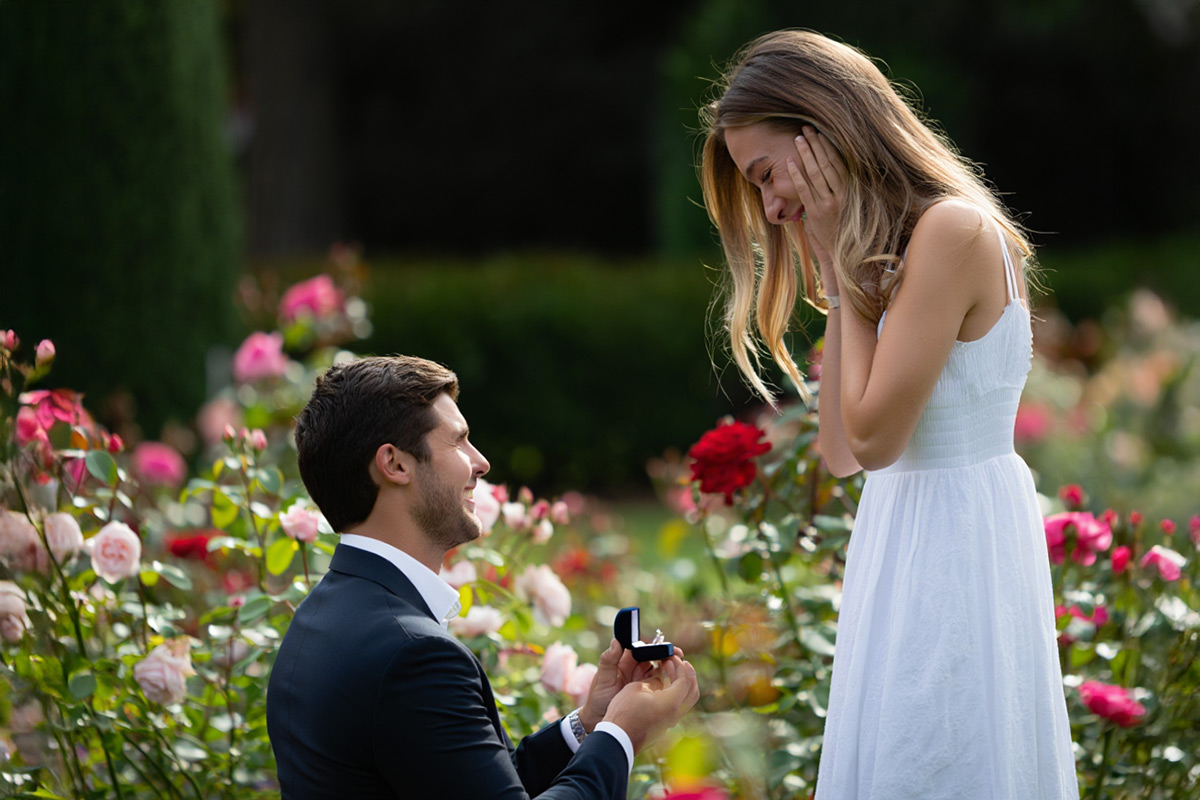
Rethinking the ‘Diamond Is Forever’ Rule
Let’s be real here – the idea that a proper proposal requires a diamond ring is one of the most successful marketing campaigns in history. De Beers coined the phrase ‘A Diamond is Forever’ in 1947, and for decades, we’ve been conditioned to believe that the size and cost of the ring is a measure of how much you love someone.
But that was then, and times are changing. More and more couples are waking up to the fact that there are stunning, durable, ethical alternatives to mined diamonds – and chief among them is moissanite. If you’re planning to propose and you want to give her something really beautiful without breaking the bank, you owe it to yourself to learn about this gemstone.
What Is Moissanite? (A Gemstone That Came From Space)
Moissanite has a genuinely cool origin story. It was first discovered in 1893 by Nobel Prize-winning chemist Henri Moissan inside a meteorite crater in Canyon Diablo, Arizona. Moissan initially thought he had found diamonds. It wasn’t until 1904 that he confirmed the crystals were actually silicon carbide, a completely different compound. The mineral was later named moissanite in his honor.
In nature, moissanite is extraordinarily rare, far rarer than diamonds. You won’t find it at the end of a mine shaft. Today, all moissanite sold in jewelry is lab-grown, produced in controlled environments using advanced technology. That means it’s fully traceable, requires no mining, and has a significantly smaller environmental footprint than a mined gem.
And here is what’s important to understand: moissanite is not a fake diamond. It’s not a cubic zirconia. It’s a distinct gemstone with its own chemical makeup and its own impressive set of properties. Calling moissanite a fake diamond is like calling sapphire a fake diamond, it’s just a different, beautiful stone.
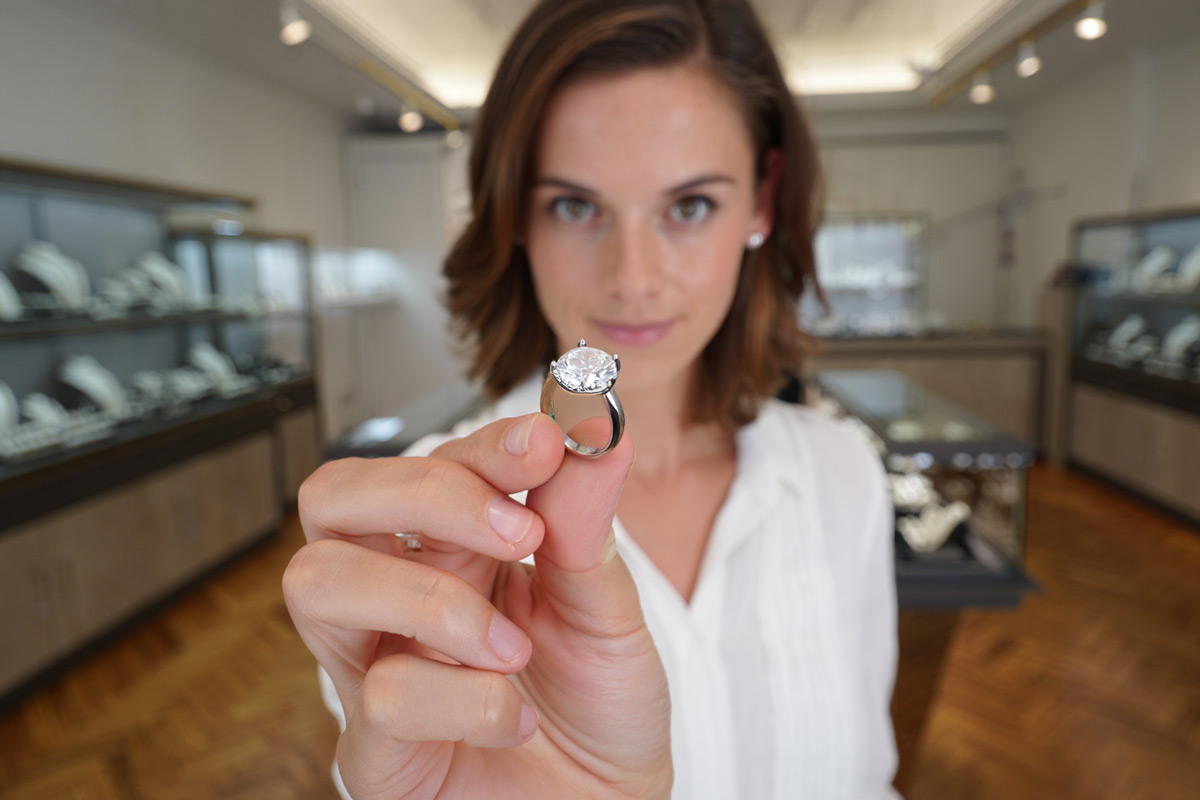
Moissanite vs. Diamond: The Honest Side-by-Side
Here’s how moissanite stacks up against a natural diamond across the categories that matter:
| Category | Moissanite | Diamond (Natural) |
| Price | ~$300–$800/ct | ~$5,000–$10,000+/ct |
| Hardness (Mohs) | 9.25 — excellent for daily wear | 10 — hardest known mineral |
| Brilliance | Slightly higher; more rainbow fire | Classic white sparkle |
| Origin | Lab-grown (traceable) | Mined from the Earth |
| Color | D-E-F or G-H equivalent grades | Graded D to Z scale |
| Eco-Friendly? | Yes, no mining required | Traditional mining impact |
| Detectable? | Rarely, without a loupe | The standard benchmark |
Appearance & Sparkle
Moissanite actually has a higher refractive index than diamond (2.64–2.69 vs. 2.42), meaning it bends and reflects light more intensely. The result is more ‘fire’ — those rainbow flashes you see when light hits a gemstone. Some people love this effect. Some prefer the more classic, white-light brilliance of a diamond. Neither is wrong; it’s simply a matter of taste.
For stones under 1 carat, the difference is barely noticeable to the naked eye. For larger stones, the extra fire becomes more apparent. If your partner prefers a subtler, more classic look, keep that in mind.
Hardness & Durability
Diamond scores a 10 on the Mohs hardness scale – the maximum. Moissanite scores 9.25. In practical terms, both are completely fine for everyday wear. Your soon-to-be-wife can wear a moissanite ring every day for the rest of her life without worrying about it scratching easily or deteriorating. It’s harder than sapphire, harder than ruby, and harder than virtually everything she’ll ever encounter in daily life.
Color
Modern moissanite is grown to be colorless or near-colorless, and jewelers grade it similarly to diamonds – you can get stones equal to a D-E-F (colorless) grade or a G-H (near-colorless) grade. In older moissanite, a slight yellow or green tint was sometimes visible under certain lighting, but that’s largely been engineered out of today’s premium stones.
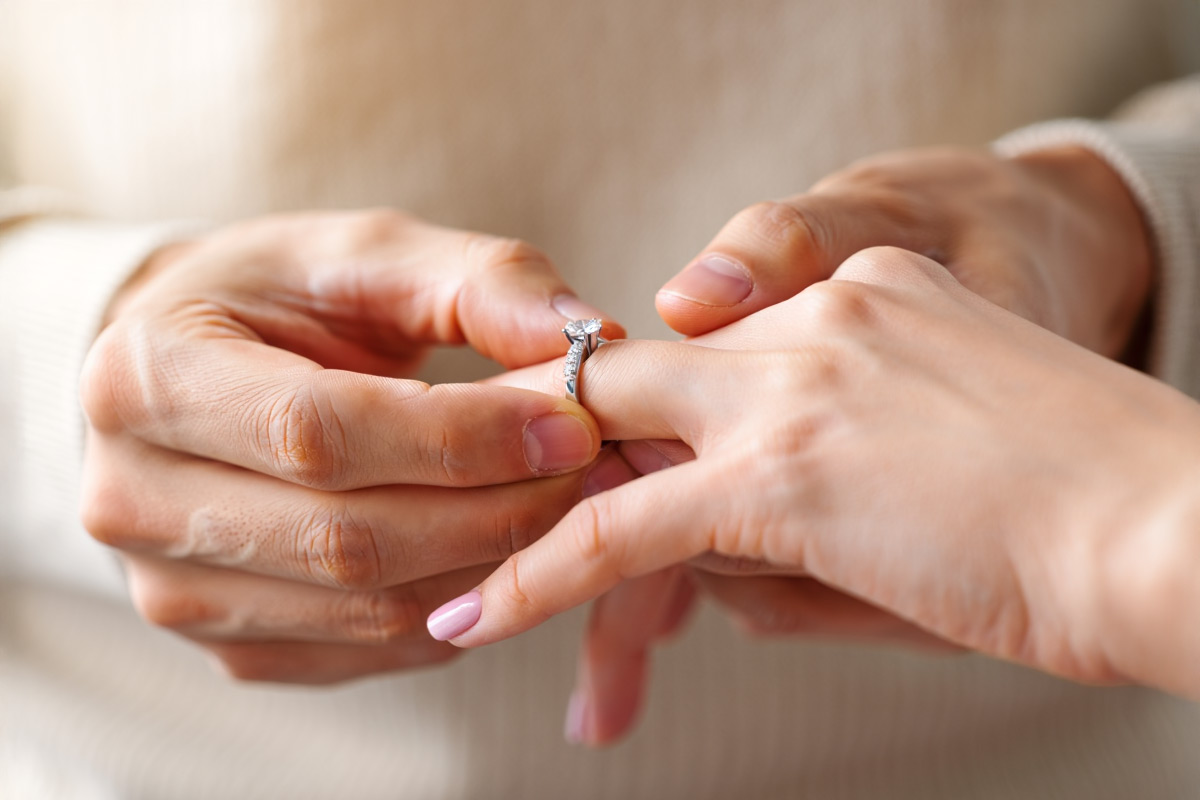
The Price Factor: What Your Money Actually Gets You
This is where moissanite changes the game entirely.
A high-quality 1-carat natural diamond engagement ring typically runs between $5,000 and $10,000 or more depending on cut, clarity, and color. A comparable moissanite? You’re looking at roughly $300 to $800 for the stone itself — sometimes less. We’re talking about a savings of 80–90% for a stone that looks virtually identical to the casual observer.
| Think about it this way: For the cost of a mid-range diamond ring, you could get a moissanite ring AND put a meaningful chunk toward a honeymoon, a house down payment, or a real financial foundation for your future together. That’s not settling, that’s smart. |
You can also use the savings to go bigger. Want to give her a stunning 2-carat center stone that would be jaw-dropping on her finger? With moissanite, that’s within reach for most budgets. With a natural diamond, a 2-carat stone would run you $15,000–$25,000 or more.
The value proposition is simply hard to argue with.
The Ethics & Environment Angle
If your bride-to-be cares about where her jewelry comes from (and trust me, many women do), moissanite has a significant edge over mined diamonds.
Traditional diamond mining has well-documented environmental and humanitarian concerns: habitat destruction, significant water usage, and a long history of conflict diamonds (though certifications like the Kimberley Process have helped). Even ethically sourced mined diamonds require substantial energy and environmental disruption to extract.
Moissanite is grown in a laboratory. There’s no mining, no displacement of communities, no conflict supply chain to worry about. If sustainability and ethics matter to your partner or to you, a moissanite engagement ring is an easy win on that front.
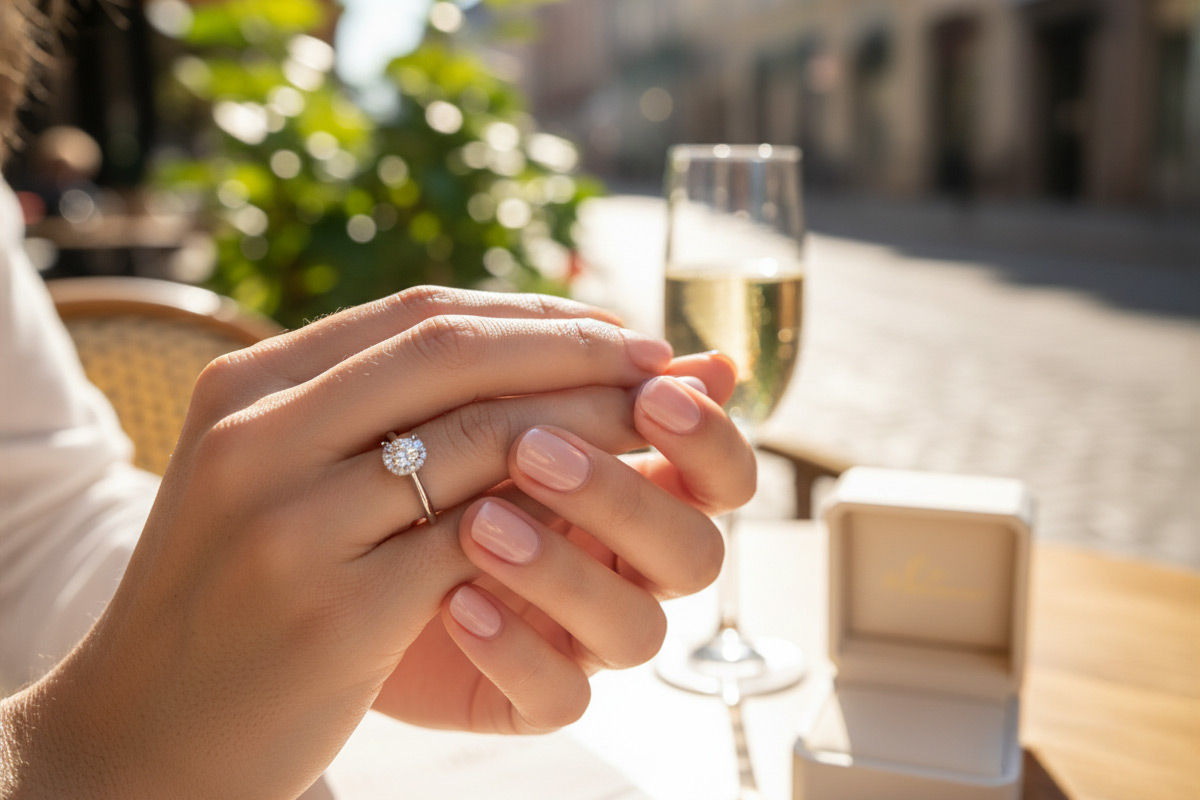
Common Concerns, Addressed Honestly
“Will she be disappointed it’s not a diamond?”
This is the big one, and the answer is: it depends on her, and it depends on how you approach it. Some women have dreamed about a diamond engagement ring their whole lives and that matters to them, and that’s completely valid. If that’s your partner, a surprise moissanite ring may not land the way you’re hoping.
But many women are either completely on board with moissanite (especially if they care about sustainability or budget), or they simply don’t care what the stone is as long as it’s beautiful and the proposal itself is meaningful.
The smart move: have a casual conversation before you buy. Bring it up naturally. ‘Hey, I read about moissanite rings, have you ever seen one? What do you think?’ You’ll get valuable intel without spoiling the surprise of the proposal itself.
“Does moissanite get cloudy or lose its sparkle over time?”
No. This is a common misconception, often confused with cubic zirconia, which does degrade over time. Moissanite is chemically stable and does not cloud, fade, or lose its brilliance. With normal care (occasional cleaning, avoiding harsh chemicals), a moissanite ring will look just as good in 30 years as it does on the day you propose.
“Will people be able to tell it’s not a diamond?”
Extremely unlikely. Even trained jewelers need a loupe (a special magnifying tool) to reliably distinguish moissanite from diamond by examining the facet junctions. To the naked eye, a high-quality moissanite and a diamond look essentially identical. The only real tell at larger carat sizes is the extra ‘rainbow fire,’ which honestly just looks like a very sparkly stone to most people.
“Isn’t moissanite just a cheap knockoff?”
This question misses the point. Moissanite is a legitimate gemstone with its own merits. It’s not trying to ‘pretend’ to be a diamond any more than a ruby pretends to be a sapphire. The lower price is a function of how it’s made (lab-grown vs. mined), not a reflection of its quality. Plenty of couples choose moissanite specifically because of its properties, not just the price.
Who Should (and Shouldn’t) Buy Moissanite
Moissanite is a great choice if…
- You’re working with a realistic budget and want to maximize what you can give her
- Your partner values ethics and sustainability in her purchasing decisions
- She loves sparkle and won’t mind (or will love) the extra fire moissanite produces
- Neither of you is particularly attached to the cultural tradition of mined diamonds
- You want a larger stone that would be cost-prohibitive in diamond
You might want to consider a diamond if…
- Your partner has specifically and repeatedly said she wants a diamond engagement ring
- Family heirloom traditions or cultural expectations around diamonds are important to her
- She’s very knowledgeable about gemstones and would notice the difference
- Resale value or traditional investment value matters significantly to you both
There’s no universally right answer. The best ring is the one your partner will love wearing and looking down at every day.
Tips for Buying a Moissanite Engagement Ring
Understand the Grading
Unlike diamonds, moissanite isn’t graded on the full 4 C’s system (cut, color, clarity, carat). It’s primarily evaluated on cut, color, and clarity. Why not that fourth C? A carat is the traditional measuring unit of a diamond’s weight (1 carat = 200 milligrams), and since moissanite is slightly less dense than a diamond, moissanite is typically sold by millimeter size (sometimes with the diamond equivalent in carats listed next to it).
Choose Your Shape
Moissanite is available in all the popular shapes: round brilliant, oval, cushion, pear, emerald, marquise, and more. Round brilliant tends to show off moissanite’s fire the most. Elongated shapes like oval or pear can make the stone appear larger.
Pick the Right Metal
White gold and platinum settings tend to complement moissanite’s colorless brilliance best, though yellow gold and rose gold can create a beautiful vintage-inspired look. The metal choice is ultimately about her personal style.
Where to Shop
Several reputable retailers specialize in or carry quality moissanite rings. Brilliant Earth offers a wide selection of moissanite stones with ethical sourcing credentials. Charles & Colvard (the original creator of gem-quality moissanite) is another trusted name. You can also find quality options on sites like Moissanite Co. and Gema&Co, as well as custom jewelers who will let you pick the stone and setting separately.
| Pro Tip: Buying the stone and setting separately often gives you the best value and the most customization options. You can choose the exact grade of moissanite you want, then pair it with a setting that matches her style perfectly. |
Get It in Writing
Make sure any moissanite you purchase comes with documentation stating the stone type, quality grade, and size. Reputable sellers will provide this as a matter of course. This also protects you and her if you ever need to have the ring appraised or insured.
The Bottom Line
Here’s the truth: an engagement ring is a symbol. What it symbolizes, your commitment, your love, your intention to spend your life with this person, has nothing to do with whether the center stone was blasted out of the ground at great expense or grown in a laboratory from silicon carbide.
Moissanite gives you a beautiful, durable, ethically produced gemstone that looks stunning on a ring and will last a lifetime. It frees up your budget for things that actually matter to your future together. And increasingly, it’s the smart, intentional choice of couples who have done their homework and decided they’re not interested in paying a diamond industry premium for tradition’s sake.
Talk to your partner. Do your research. Then make the call that’s right for the two of you. That’s the most romantic move of all.
Frequently Asked Questions:
Is moissanite a real gemstone?
Yes. Moissanite is a genuine gemstone made of silicon carbide. It can occur naturally (though extremely rarely), and it is also produced in laboratories. It has its own distinct properties, grading system, and market value.
Does moissanite look fake?
No, not to the naked eye. A high-quality moissanite stone is visually indistinguishable from a diamond without specialized equipment. The main observable difference is that moissanite produces slightly more colorful ‘fire’ when light hits it, which most people simply perceive as a very sparkly stone.
How much does a moissanite engagement ring cost?
It varies based on size, grade, and setting, but a quality moissanite center stone typically costs $300–$800 per “carat”. A complete ring (stone + setting) can range from $500 for something simple to $2,000 or more for an elaborate, premium design, a fraction of what a comparable diamond ring would cost.
Will moissanite last a lifetime?
Yes. Moissanite scores a 9.25 on the Mohs hardness scale, making it extremely resistant to scratching and suitable for everyday wear. It does not get cloudy or degrade over time. With basic care, a moissanite ring will look as good decades from now as it does today.
Is moissanite the same as cubic zirconia?
Not at all, they are completely different. Cubic zirconia (CZ) is made from zirconium dioxide and is much softer, prone to cloudiness over time, and generally considered a cheap costume jewelry stone. Moissanite is significantly harder, more durable, and retains its brilliance permanently. Comparing the two does moissanite a serious disservice.
Can I insure a moissanite engagement ring?
Absolutely. Many homeowners and renters’ insurance policies allow you to add valuable items like jewelry to your policy. You’ll need to add a jewelry rider or personal property endorsement to ensure your moissanite ring is covered. You can also use a jewelry insurance provider like Jewelers Mutual. Just make sure you have documentation of the stone and an appraisal.











Southwest Airlines Facing Backlash After Getting Rid Of Open Seating

Samsung Galaxy S26: Smarter AI, 200MP Camera, New Privacy Display

Indian Motorcycle Drops Stunning 125th Anniversary Collection

Polaris Slingshot’s 2026 Signature Edition Is An Absolute Head-Turner

TAG Heuer’s New F1 Smartwatch Is Built For Race Fans

Netflix’s ‘War Machine’ Turns Army Ranger Training Into Fight For Survival

Tinder’s New Chemistry Feature Could End Your Swiping Nightmare

Apple CarPlay Could Soon Support ChatGPT and Other AI Assistants

Breitling Named The Official Watch Partner Of Aston Martin And F1 Team

10 Tips To Score Last-Minute Winter Travel Deals Without Sacrificing Comfort

Watch The Fast And Furious Trailer For ‘Hobbs & Shaw’

A Dance-Off For The Ages Broke Out At Monday Night’s 76ers Game

Netflix Drops ‘Black Mirror: Bandersnatch’ Trailer Ahead Of Release Tomorrow

Former NASA Engineer Gets Revenge On Package Thief With Glitter Bomb

Recent Comments