Guy Stuff
Scottsdale’s Most Dangerous Intersections and What Drivers Should Know Before the Next Crash

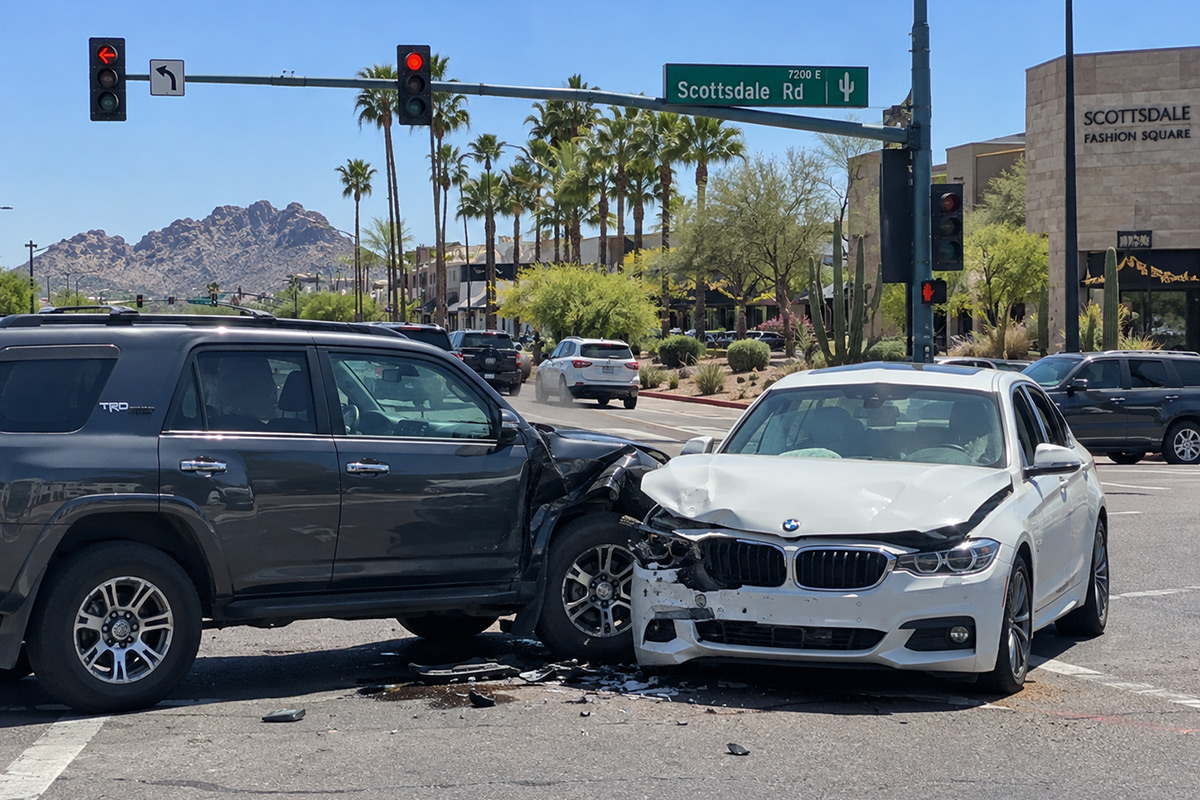
Anyone who drives Scottsdale Road during rush hour, merges onto Loop 101 near the Pima Freeway stack, or cuts across Shea Boulevard on a weekday afternoon already knows the pattern. Traffic bunches up, someone is looking at a phone instead of a light, and a fender bender that should have been a near miss turns into an ambulance call. Arizona Digital Free Press set out to look at why certain Scottsdale corridors keep producing the same kinds of crashes year after year, and what a driver should actually do in the minutes, hours, and weeks after one happens. Local traffic data points to a familiar list: the Loop 101/Loop 202 interchange, the Scottsdale Road corridor through Old Town, and the Shea Boulevard stretch feeding into North Scottsdale neighborhoods. Heavy commuter volume, tourists unfamiliar with the area, and left turn lanes that back up during peak hours all combine to make these intersections repeat offenders on the crash report.
To understand what happens after the collision itself, this outlet spoke with Charles Paglialunga, Esq., a Scottsdale personal injury attorney who has practiced Arizona injury law for 29 years and founded Valley Accident Law, a PLLC serving Scottsdale and the broader Phoenix metro. His answer to why these intersections matter beyond the traffic report was not what we expected: the location of the crash barely factors into how the claim gets built. What matters is how fast the injured driver acts once the collision happens, regardless of which Scottsdale intersection it occurred at.
Why Do the Same Scottsdale Intersections Keep Showing Up in Crash Reports?
Volume and mismatch are the two biggest drivers. The Loop 101 interchange near Pima and Princess Drive funnels commuters from several directions into merge lanes that fill fast during morning and evening rush, and a driver hesitating in unfamiliar merge traffic is a common trigger for rear end and sideswipe collisions. Scottsdale Road through Old Town mixes slow moving tourist and rideshare traffic with commuters trying to make time, a combination that produces sudden stops and T-bone collisions at signaled crossings. Shea Boulevard’s long straight stretches encourage higher speeds right up until a signal or left turn lane forces an abrupt slowdown, and that speed differential is where a lot of rear end crashes originate.
None of that is unique to Scottsdale. What is worth knowing locally is that Arizona applies a pure comparative fault rule to every one of these crashes, meaning a driver found partly at fault can still recover damages, just reduced by their share of responsibility. A driver who was going five miles over the limit through the Shea Boulevard corridor when someone else ran the light does not lose the claim, but the fault percentage assigned to them will shrink whatever they eventually recover. That single rule is why the evidence gathered at the scene, and in the days right after, carries so much weight regardless of which intersection the crash happened at.
“People assume the intersection tells the story,” Paglialunga said. “It doesn’t. The evidence tells the story, and evidence has a shelf life. Doorbell cameras near these corridors often cycle their footage out in about a week. Vehicles get repaired or sold within two weeks in a lot of cases, and once that happens, the crush pattern that shows speed and braking is gone. The intersection is just where it happened. What we can prove afterward is what decides the outcome.”
What Should a Driver Actually Do in the First 48 Hours?
Get medical care, get the police report, and avoid giving a recorded statement to any insurance adjuster before speaking with an attorney. That sequence sounds obvious, but Paglialunga said the most common mistake he sees is a driver trying to handle the adjuster call themselves within the first day or two, while still in pain and without a full picture of their injuries. An early recorded answer, given honestly but without medical clarity yet, often gets replayed later as evidence the injury was minor.
Arizona law does not pause the clock for anyone to feel ready. Witnesses who saw a crash at Scottsdale Road and Camelback, for example, are far easier to track down within the first week than a month out. Nearby business security footage on a short retention cycle can be gone before anyone thinks to request it. Valley Accident Law’s intake process is built around that timing gap specifically, with same day phone consultations so a preservation request can go out for camera footage or vehicle data before it disappears, at no upfront cost to the injured driver and no fee unless the case recovers money.
Do Truck, Motorcycle, and Rideshare Crashes at These Intersections Work Differently?
Yes, and the differences show up fast. A commercial truck involved in a crash near the Loop 101 interchange brings a separate carrier policy, potential cargo insurance, and federal recordkeeping rules around driver hours and vehicle maintenance that an ordinary car accident never touches. That carrier data, particularly the electronic logging device records that show what the driver was doing before impact, needs a formal preservation request fast, since it is not something an unrepresented driver can typically obtain on their own before it cycles out of the system.
Motorcycle crashes tend to produce more severe injuries relative to the visible vehicle damage, which changes the medical timeline. A rider hurt at a Scottsdale Road crossing may need imaging within the first few days specifically to document the injury before an insurer can argue it was pre-existing or unrelated. Rideshare crashes carry their own wrinkle: coverage depends on whether the driver’s app was off, on and waiting for a ride, or actively transporting a passenger at the moment of the crash, and each status points to a different insurance policy that needs to be notified.
What Happens in the 30 Days After the Crash Matters More Than the Intersection Itself
Consistent medical treatment is the single biggest factor in how a claim gets valued, according to Paglialunga. Skipping a follow up appointment and returning weeks later once pain returns gives an adjuster a ready made argument that the later visit is unrelated to the original crash. Soft tissue, spinal, and brain injuries in particular tend to evolve over the first month, so ongoing documentation from treating providers matters more than a single emergency room visit ever could.
Photographing the vehicles and the intersection itself, requesting the police report, and keeping a running log of medical bills and missed work hours are all steps a driver can take without legal help, and all of them make a future claim easier to prove. Once an attorney is involved, direct communication with the insurance carrier typically shifts to the firm, freeing the injured driver to focus on recovery rather than adjuster calls.
Scottsdale’s crash-heavy corridors will likely keep making local traffic reports for the same structural reasons they do now: merge volume, mixed tourist and commuter traffic, and speed differentials at signaled crossings. For any driver hurt at one of them, the practical lesson from nearly three decades of Arizona injury practice is the same no matter which intersection is involved. The claim is strongest when the evidence is gathered early, before footage cycles out and before vehicles get repaired, and that work starts with a phone call, not with which intersection the crash happened to occur at.




Upgrade Tips For The 2013–2017 Subaru Crosstrek: Practical Accessories, Protection, and Value

Is It Time To Replace Your Tires Before Winter?

Bentley Torcal Revealed: The First Electric Bentley Is Here, And It Means Business

TAG Heuer’s Carrera Chronograph Sport Returns With A Sharper, Smaller Design

A Smarter Chicago, Illinois Food Weekend: Pair Neighborhoods, Appetite, and Budget
Is It Time To Replace Your Tires Before Winter?
A Smarter Chicago, Illinois Food Weekend: Pair Neighborhoods, Appetite, and Budget
TAG Heuer’s Carrera Chronograph Sport Returns With A Sharper, Smaller Design
Bentley Torcal Revealed: The First Electric Bentley Is Here, And It Means Business
Upgrade Tips For The 2013–2017 Subaru Crosstrek: Practical Accessories, Protection, and Value

Watch The Fast And Furious Trailer For ‘Hobbs & Shaw’

A Dance-Off For The Ages Broke Out At Monday Night’s 76ers Game

Netflix Drops ‘Black Mirror: Bandersnatch’ Trailer Ahead Of Release Tomorrow

Former NASA Engineer Gets Revenge On Package Thief With Glitter Bomb

Recent Comments