
Fashion
TAG Heuer’s New Sunglasses Prove Racing Style Never Goes Out Of Fashion

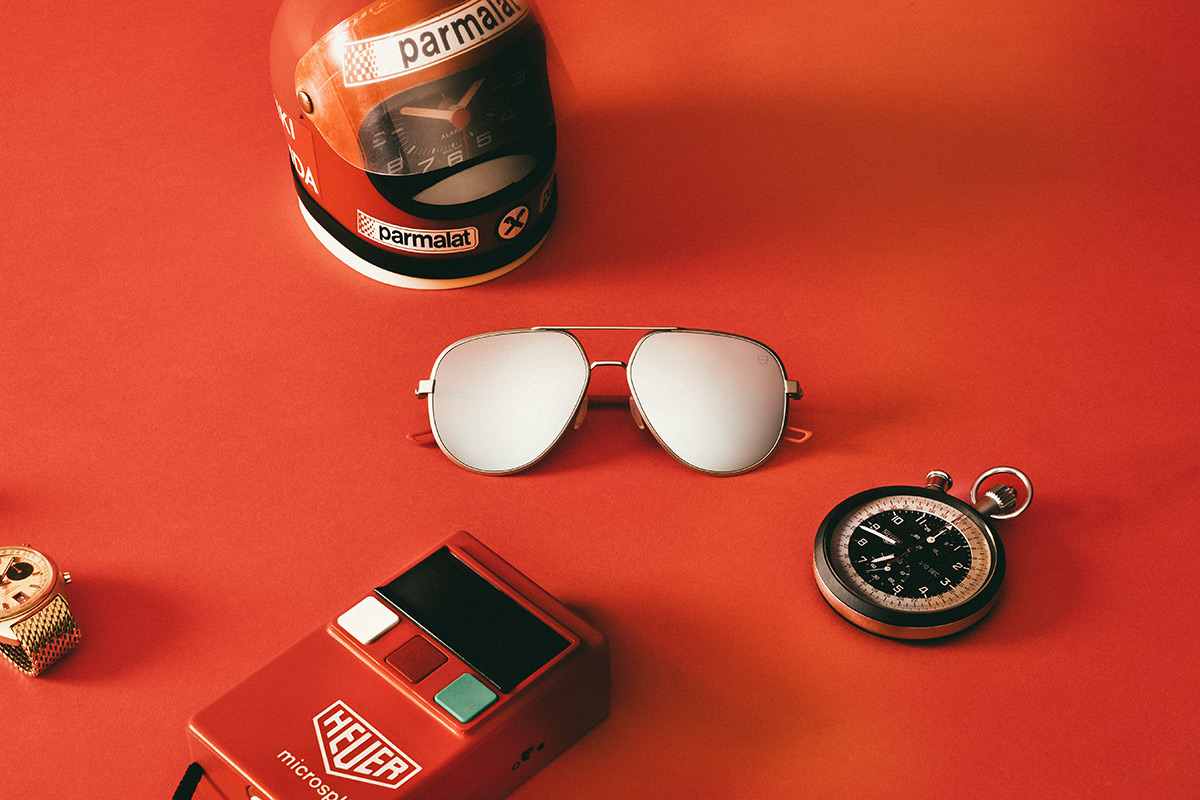
If you’re into watches, racing, or just good-looking eyewear, TAG Heuer has something for you. The Swiss watchmaker has unveiled two new sunglasses collections, the TAG Heuer Eyewear Jack Heuer and the TAG Heuer Golden Age, both of which pull design cues straight from motorsport’s history. One leans into pure precision, while the other channels the elegance of Formula 1’s golden decades. Together, they mark TAG Heuer’s biggest eyewear push yet.
The Story Behind The Precision: Meet “The Pianist”
Before getting into the frames, it helps to know the man who inspired one of the collections. In 1972, Jean Campiche joined Heuer and started operating the Le Mans centigraph – a device used to time race cars down to fractions of a second. He got so fast and precise at logging lap times that people in the paddock started calling him “The Pianist.”
Jean Campiche’s work didn’t stop at the track. He later played a key role in helping TAG Heuer become the Official Timekeeper of Formula 1 in 1992. Having just turned 80, he never eased his pursuit of accuracy, leaving a mark on the world of motorsport that no stopwatch can fully measure. His decades of obsessive accuracy are the direct inspiration for the Jack Heuer collection’s design philosophy.
TAG Heuer Eyewear Jack Heuer: Racing-Grade Precision on Your Face
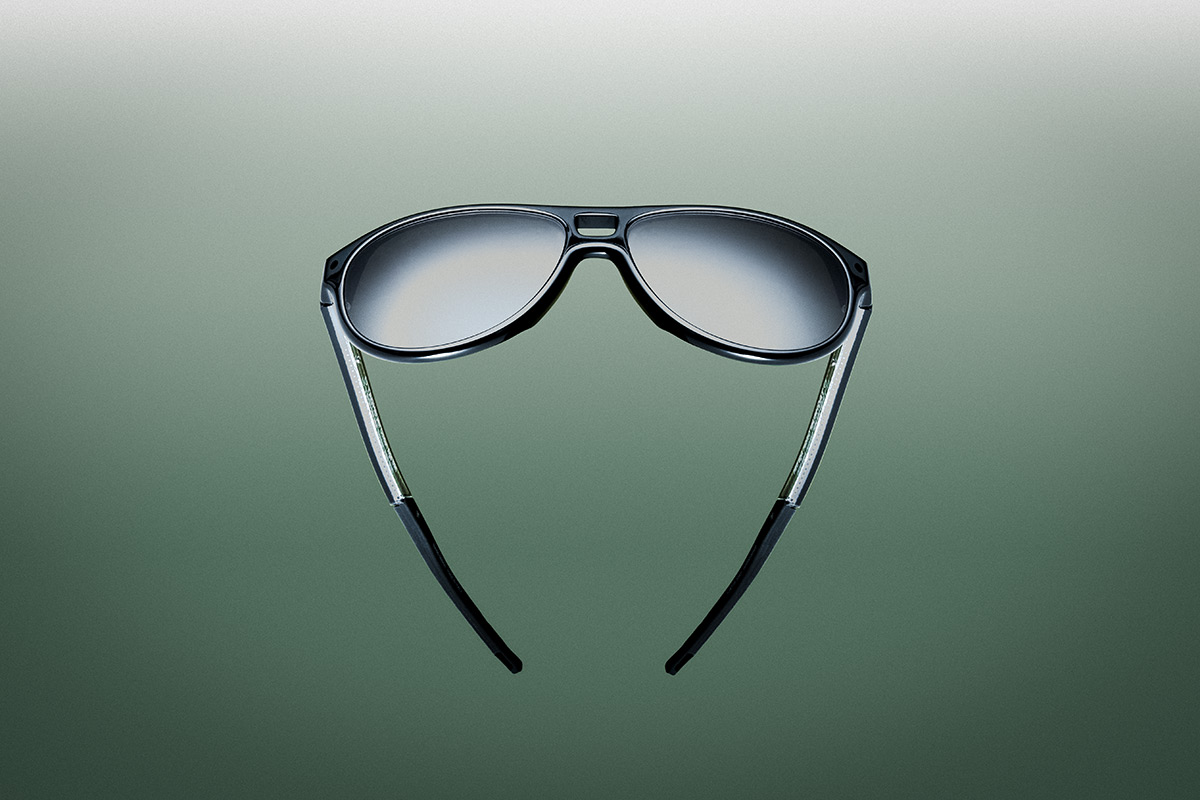
This is the collection that takes its cues directly from the timing stand rather than the driver’s seat, and it shows in every detail. The Jack Heuer reworks the classic aviator-style pilot shape through the lens of 1970s motorcading culture, when form and function had to work together or you were out of the race.
Build and materials: The frame is crafted in Japan from shiny palladium titanium, a material choice that gets you a rare combination: enough structural integrity to survive daily abuse, but light enough that you forget you’re wearing it. This isn’t a frame that’s going to slide down your nose on a hot day or feel like a clamp by hour three.
Fit that actually adjusts: TAG Heuer built in adjustable rubberized bio-nylon nose pads, so the fit can be dialed in to your face rather than a generic mold. The titanium temples carry bio-nylon end tips finished in a signature red – a small pop of color against all that metal, and a detail that reads as intentional rather than decorative. Together, the nose pads and temple tips mean the glasses stay put no matter what the day throws at them, whether that’s a long drive, a day at the track, or just a Tuesday.
Finishing details: The TAG Heuer logo is engraved and lacquered directly onto the frame, the kind of finishing touch you’d expect on a timing instrument rather than a pair of sunglasses. It’s a subtle nod to the brand’s obsession with precision manufacturing, not just design.
Lenses: The solid smoke bio-nylon lenses come with a silver mirror coating that cuts glare without muddying your vision, which is important if you plan to drive in these rather than just pose in them. The overall look lands somewhere between understated and authoritative: not flashy, but clearly built by people who care about performance over hype.
Basically, it’s a pair of sunglasses engineered with the same obsessive attention to detail that defined Campiche’s career, and considerably easier to pull off at a bar than a stopwatch.

TAG Heuer Golden Age: F1 Nostalgia Meets Modern Engineering
If the Jack Heuer collection is about precision, the Golden Age collection is about the vibe of Formula 1’s most stylish decades, when the paddock looked as sharp as the cars did. TAG Heuer built this line around the “Restomod” concept borrowed from the automotive world where a classic form is preserved but upgraded with modern engineering and materials. You are getting a vintage-look frame with none of the vintage compromises.
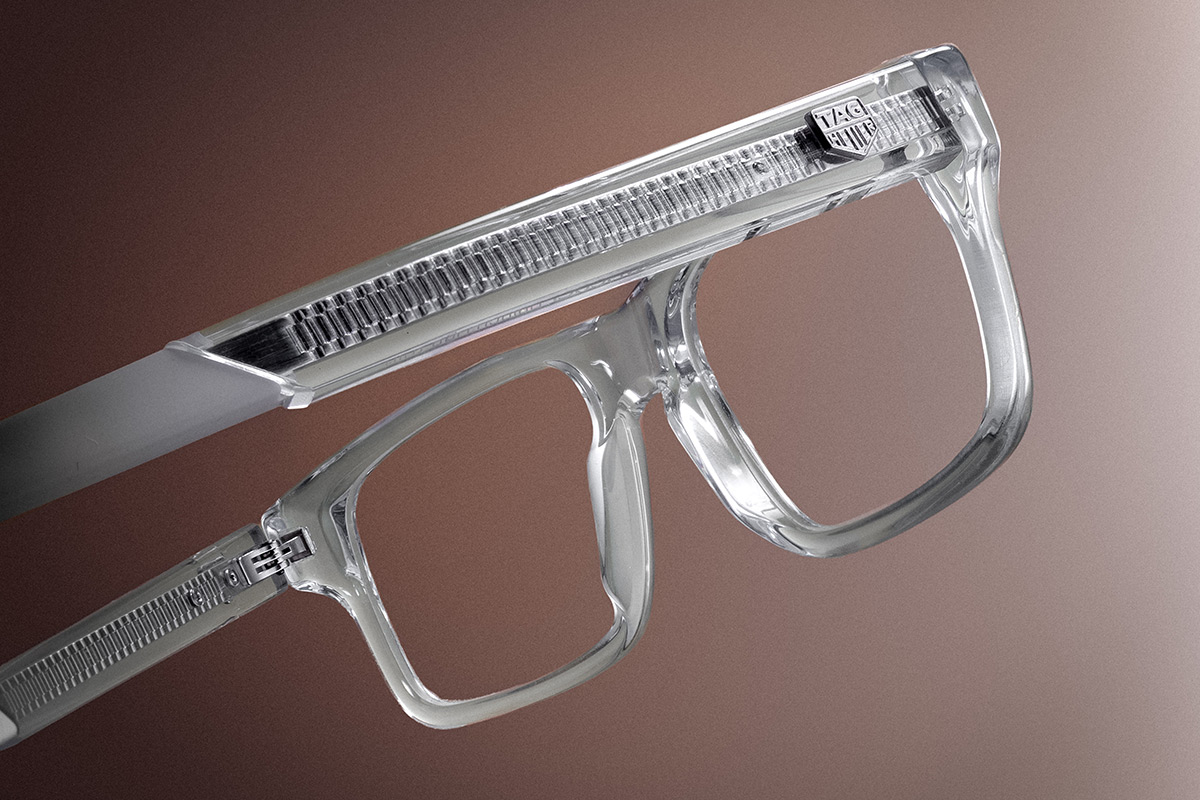
Design details that reward a closer look: One of the most interesting detail is hidden inside the temples: a core wire pattern lifted directly from the H-Links bracelet of the TAG Heuer Carrera Three Hands watch. Because the temples are made from crystal acetate, that pattern is actually visible if you look closely. It’s a quiet crossover between the brand’s watchmaking and eyewear lines that most people will miss, but the ones who notice will appreciate. There’s also a relief metal shield running along the temples that only catches the light when the frame moves, rather than shouting for attention while sitting still.
Colors pulled from the watch dial, not a color wheel: The lens tints (deep black, racing blue, vibrant red, and rich green) are lifted directly from TAG Heuer Carrera watch dials rather than a generic sunglasses palette. It’s a small thing, but it ties the eyewear line back to the brand’s core watchmaking identity instead of feeling like a bolted-on side project.
Built with a racer’s input: The collection was developed alongside brand ambassador Patrick Dempsey, an accomplished racing driver in his own right, which shows up in the practical touches: interchangeable rubberized bio-nylon nose pads that adapt to different face shapes, and straight temples with adjustable rubber tips that keep the frame locked in through changing conditions – heat, sweat, wind, whatever.
Two styles to choose from:
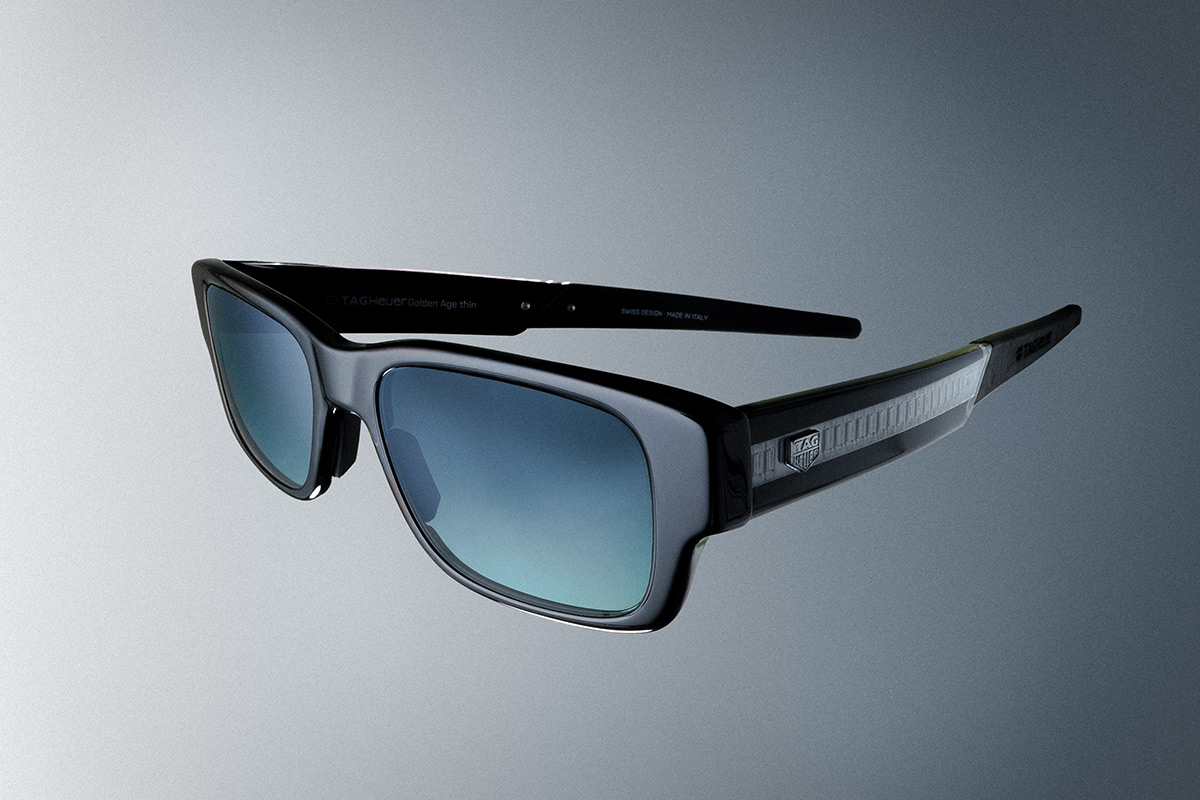
- Style One: A shiny black front paired with black-and-crystal acetate temples that show off the H-Links-inspired structure underneath. The gradient blue bio-nylon lenses give a smooth visual transition and solid glare reduction for bright days. Anti-reflective and anti-dirt coatings come standard, and the lenses are fully RX-compatible if you need a prescription.
- Style Two: The more restrained option: an all-black shiny acetate build with rubber end tips on the temples and solid smoke bio-nylon lenses. Less flash, same performance, and also fully RX-compatible.
Beyond the two sunglasses styles, TAG Heuer is rolling out optical (non-tinted) versions in transparent crystal and olive green acetate for guys who want the retro-racing look for everyday glasses, not just shades.
Bottom Line
Whether you’re drawn to the stripped-down precision of the Jack Heuer line or the retro-cool vibe of Golden Age, both collections back up their looks with real engineering — adjustable fits, RX compatibility, and materials built to last. It’s a solid move for TAG Heuer as it keeps pushing into the eyewear space, and a good excuse to upgrade your shades before summer driving season kicks into gear.










A Smarter Chicago, Illinois Food Weekend: Pair Neighborhoods, Appetite, and Budget

FuelFest Brings Car Culture Spectacle To New Jersey This Saturday!

The Mercedes-AMG CLE 646 Is A 637-Horsepower Track Weapon

Aston Martin’s First Road Bike Is Here, And Only 300 People Will Own One

New Street Fighter Trailer Is Here, And It’s Everything We Wanted
Aston Martin’s First Road Bike Is Here, And Only 300 People Will Own One
New Street Fighter Trailer Is Here, And It’s Everything We Wanted

TAG Heuer’s Limited-Edition Monza Is A Tribute To Niki Lauda’s Title Run

HUSH Pro Clipper: The Cordless Upgrade Your Head-Shaving Routine Needs
FuelFest Brings Car Culture Spectacle To New Jersey This Saturday!

Watch The Fast And Furious Trailer For ‘Hobbs & Shaw’

A Dance-Off For The Ages Broke Out At Monday Night’s 76ers Game

Netflix Drops ‘Black Mirror: Bandersnatch’ Trailer Ahead Of Release Tomorrow

Former NASA Engineer Gets Revenge On Package Thief With Glitter Bomb

Recent Comments